

BV vs Yeast vs Trich: the quick difference guide

Fishy odor? Itching? Discharge that just won’t quit? If you’re trying to figure out whether you have bacterial vaginosis (BV), a yeast infection, or trichomoniasis (trich), you’re not alone. These three conditions cause overlapping symptoms that drive women to pharmacies, Google, and endless self‑treatment cycles.
This guide gives you the clear differences, quick comparison charts, testing info, and when to see a clinician. It’s not a replacement for professional diagnosis, but it’ll help you understand what might be going on and ask better questions at your appointment.
Internal Links
The big three: What each condition is
Bacterial Vaginosis (BV)
What it is: Imbalance where Lactobacillus (good bacteria) drop and anaerobes like Gardnerella overgrow. Not an STI.
Who gets it: 20–30% of women yearly. More common with new/multiple partners.
Yeast Infection (Vulvovaginal Candidiasis)
What it is: Overgrowth of Candida yeast (usually C. albicans). Not sexually transmitted.
Who gets it: 75% of women at least once; 5–8% have recurrent yeast.
Trichomoniasis (Trich)
What it is: STI caused by Trichomonas vaginalis parasite. Highly contagious.
Who gets it: ~3.7 million cases yearly (US); many asymptomatic.
Most common: Affects 1 in 3 women sometime.
Classic signs:
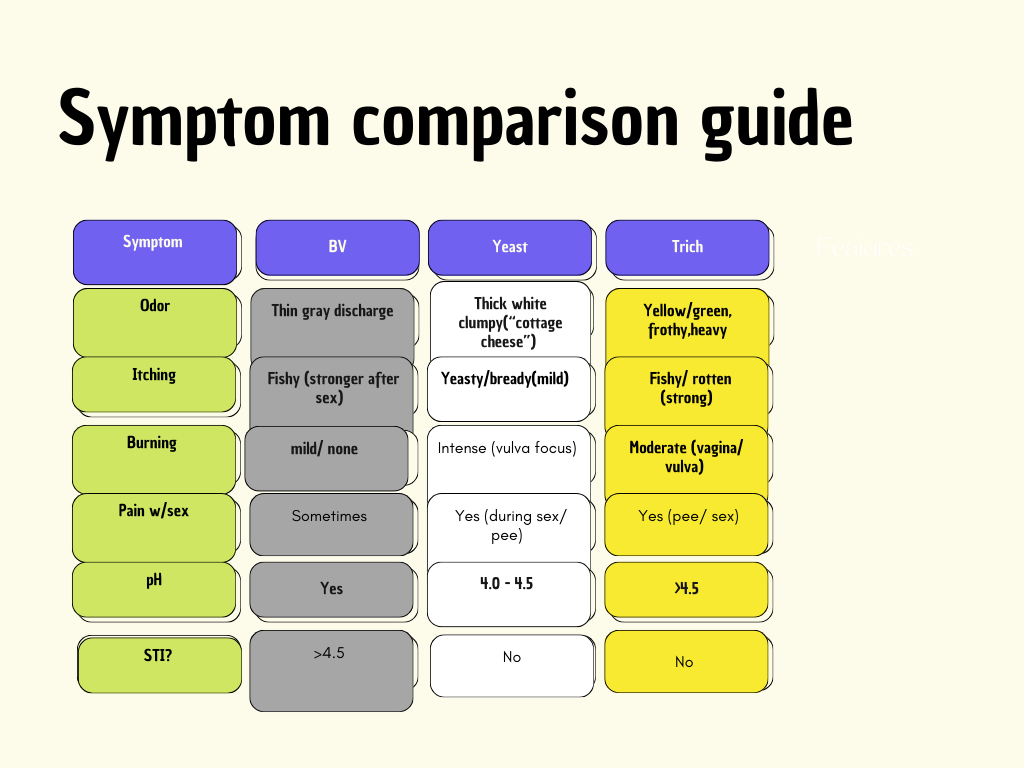
Fishy odor worst after sex/sweat.
Thin, uniform gray/white discharge (no clumps).
No significant itching.
Sometimes mild irritation.
Clue: Odor + sex = think BV first.
pH test: >4.5 (wet mount shows "clue cells").
Yeast infection: The facts
Very common: 75% lifetime risk.
Classic signs:
Thick, white, clumpy discharge ("cottage cheese").
Intense vulvar itching/burning.
Red, inflamed vulva.
Pain with sex/tampons.
Triggers: Antibiotics, pregnancy, diabetes, hormones.
pH test: Usually normal (4.0–4.5).
Trichomoniasis: The facts
STI: Spread by vaginal sex (condoms reduce risk). brightonsexualhealth
Classic signs:
Frothy yellow/green discharge.
Strong fishy/rotten odor.
Itching, burning (vagina/vulva).
Pain with sex/pee.
Clue: Strawberry cervix (red spots) on exam (not always visible). evvy
pH test: >4.5 + motile trich on wet mount.
Partners: Must be treated simultaneously.
The overlap problem (and why self‑diagnosis fails)
BV + trich: Both fishy odor, high pH, discharge. Trich has greener color, frothiness.
Yeast + irritation: Both itch/burn. Yeast has clumpy discharge; irritation doesn’t.
All three together: Possible. Trich raises BV risk; antibiotics for one trigger yeast.
Why tests matter: Symptoms alone can’t distinguish. Wet mount + pH + NAAT needed. brightonsexualhealth
Quick home clues (use with caution)
Still confused? See clinician. OTC yeast treatment failing = red flag.

Testing: What to ask for
Full vaginal workup:
Wet mount + pH (BV, yeast, trich, clue cells).
NAAT panel (chlamydia, gonorrhea, trich).
Mgen if recurrent/persistent.
Yeast culture if recurrent/non‑albicans.
Self‑treatment limits:
OTC yeast meds OK for classic yeast (itch + clumps).
BV/trich need prescriptions.
Treatment differences

Test of cure: Trich if symptoms persist cdc
When to worry/see clinician NOW
Urgent:
Heavy discharge, fever, pelvic pain (PID?).
Pregnancy + symptoms.
STI exposure + symptoms.
Soon:
Recurrent symptoms despite treatment.
OTC yeast meds failing.
Fishy odor + sexual activity.
Prevention
Condoms reduce all three.
Partner treatment for trich.
No douching (raises BV/trich risk).
Probiotics post‑antibiotics (recurrent BV/yeast). bvtalks
Frequently asked questions
Q: Fishy odor = BV?
Usually, but trich mimics it. Test both.
Q: Can I have all three?
Yes. Trich - BV - antibiotics - yeast. Comprehensive testing.
Q: OTC yeast treatment failed?
Not yeast or resistant strain. See clinician for culture/NAAT.
Q: Trich contagious?
Yes. Partners need simultaneous treatment.
Q: BV STI?
No, but sexually associated. New partners increase risk.
Key takeaways
BV: Fishy, gray, no itch. Not STI.
Yeast: Clumpy, itchy, normal pH.
Trich: Frothy green, strong odor, STI. brightonsexualhealth
Test don’t guess symptoms overlap.
Recurrent? Mgen, resistance possible. cdc
Print/take to appointment: “Can we do full wet mount + NAAT for BV/yeast/trich/Mgen?” You deserve answers.
Resources and Sources:
https://www.evvy.com/blog/mycoplasma-genitalium
https://www.cdc.gov/std/treatment-guidelines/mycoplasmagenitalium.htm
https://www.bvtalks.com/blog/tag/do+probiotics+help+BV
About the Author
Becky Freeman is the founder of BVTalks® and Bee Vee Clean. She focuses on women’s intimate health, vaginal microbiome education, and creating practical, easy-to-understand content for everyday care.
Medical Disclaimer
This content is for educational purposes only and is not intended to diagnose, treat, cure, or prevent any condition. It should not be used as a substitute for professional medical advice, diagnosis, or treatment. Always consult a licensed healthcare provider if you have questions about your health or symptoms.
