
Testosterone in Women: Low Libido, Fatigue, and Muscle Loss. What Low T Actually Looks Like
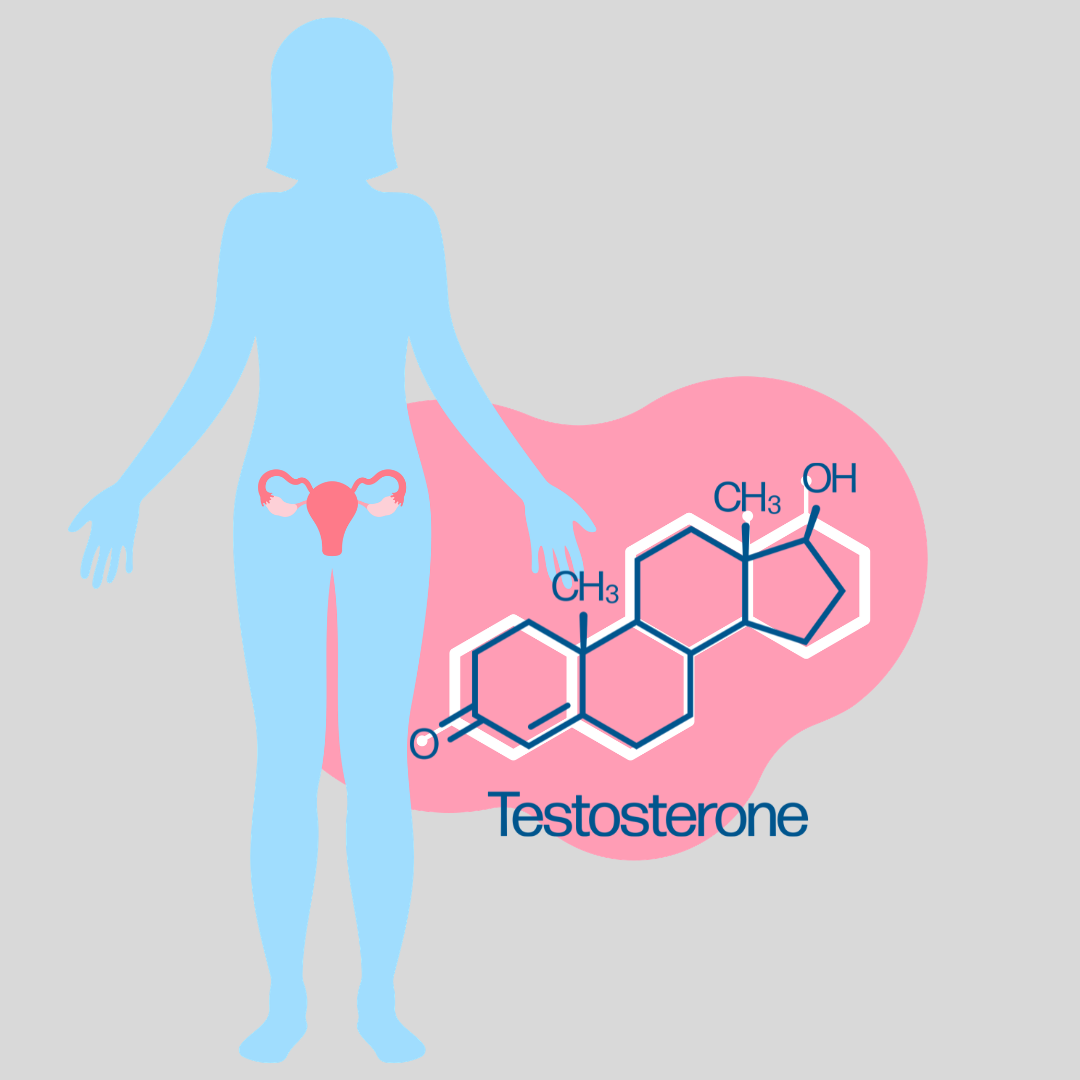
When most people hear "testosterone," they think of men. But testosterone is not a male hormone it is a human hormone, produced by women in the ovaries and adrenal glands every day. When it drops too low, the effects are unmistakable: a libido that quietly disappears, fatigue that sleep does not fix, muscle that seems to vanish regardless of how hard you train, and a brain that feels like it is operating through fog.
Low testosterone in women is real, common, and one of the most consistently underdiagnosed hormonal conditions in women's health. Its symptoms are vague enough to be attributed to depression, burnout, or "just getting older" and because no testosterone therapy is FDA-approved specifically for women in the US, many providers are uncertain how to treat it or whether to test for it at all. This post covers what testosterone does in women's bodies, what low T looks and feels like, how to test correctly, and what the evidence says about treatment.
Testosterone Is Not Optional for Women
Healthy young women produce approximately 300 micrograms of testosterone per day roughly half from the ovaries and half from the adrenal glands. That is significantly less than men produce, but it is biologically essential.
In women, testosterone plays a direct role in:
Sexual desire and arousal — testosterone is the primary driver of libido in women, not estrogen; this is one of the least communicated facts in women's health
Energy and vitality — supports mitochondrial function and energy metabolism
Muscle mass and strength — testosterone is anabolic; essential for building and maintaining lean tissue
Bone density — contributes alongside estrogen
Mood and motivation — supports dopamine pathways linked to drive, confidence, and reward
Cognitive function — focus, verbal memory, and processing speed
Skin and vaginal tissue health — supports collagen, skin thickness, and vaginal wall integrity
Normal total testosterone for premenopausal women is approximately 10–55 ng/dL; postmenopausal women typically have levels of 7–40 ng/dL far lower than the male range of 249–836 ng/dL, but essential nonetheless.
How Testosterone Declines in Women
Unlike the abrupt estrogen drop at menopause, testosterone in women declines gradually from the mid-20s onward. By the 40s, levels are roughly half of what they were in the 20s; by menopause they are often lower still.
Natural aging: The ovaries produce progressively less testosterone from the mid-20s forward a slow, continuous decline whose cumulative effects are significant.
Surgical menopause: Women who undergo bilateral oophorectomy (removal of both ovaries) lose their ovarian testosterone contribution immediately and completely. This often causes rapid-onset symptoms loss of libido, fatigue, mood changes that are frequently undertreated compared to the estrogen loss from the same surgery.
Oral estrogen therapy: Oral estrogen raises sex hormone binding globulin (SHBG), which binds testosterone and renders it biologically inactive. Women on oral estrogen often have lower free (bioavailable) testosterone even when total testosterone looks normal a critical distinction frequently missed in routine testing.
Adrenal insufficiency or hypopituitarism: The adrenal glands supply roughly half of women's testosterone; adrenal conditions and pituitary disorders that impair signaling to the ovaries or adrenals can each reduce production significantly.
What Low Testosterone Actually Looks Like in Women
Low T in women is rarely dramatic. It tends to be a slow fade a gradual dimming of things that used to feel normal. Women often describe it as feeling like a less vivid version of themselves.
Low Libido and Sexual Changes
This is the most well-documented symptom of low testosterone in women and the one with the strongest evidence base. Low testosterone is directly associated with hypoactive sexual desire disorder (HSDD) characterized by persistently low or absent sexual desire that causes personal distress.
Women with low T often describe not just reduced interest in sex but a complete absence of spontaneous sexual thoughts that used to occur naturally. Physical arousal may be diminished even when there is emotional willingness. Orgasm may become more difficult to achieve or less satisfying. This is a physiological change driven by hormonal insufficiency not a relationship problem or a psychological issue to be solved with communication alone.
Fatigue That Does Not Respond to Sleep
Testosterone supports cellular energy production. Women with low T frequently describe a specific kind of fatigue not sleepiness, but a deep depletion of drive and stamina. Getting enough sleep does not fully resolve it. The fatigue is not just physical; it extends to motivation and the ability to push through challenges that used to feel manageable.
Muscle Loss and Difficulty Building Strength
Testosterone is anabolic it is required for muscle protein synthesis. Women with low T often notice declining muscle tone, increasing abdominal fat, and diminishing returns from exercise despite consistent training. This is not a training problem; it is hormonal.
Brain Fog and Cognitive Changes
Testosterone receptors are present throughout the brain. Low T is associated with reduced verbal memory, difficulty concentrating, slower processing speed, and a general mental dimness described by many women as feeling less sharp and less able to sustain complex tasks.
Mood Changes: Low Motivation, Flat Affect, Irritability
Testosterone supports dopamine pathways linked to motivation and confidence. Low T manifests as a flattening of mood not necessarily clinical depression, but a reduced sense of drive and engagement. Women often describe feeling "meh" about things that used to matter. Irritability and reduced stress tolerance are also common.
Additional Physical Signs
Thinning hair, particularly at the crown and temples
Dry or thinning skin reduced collagen and skin thickness
Vaginal dryness testosterone contributes to vaginal wall integrity alongside estrogen
Reduced bone density particularly relevant post-menopause
Decreased overall sense of physical vitality and strength
How Low Testosterone Is Diagnosed
Total vs. free testosterone: Total testosterone measures all testosterone bound and unbound. Free testosterone measures only the biologically active unbound fraction. Because SHBG varies significantly (and is raised by oral estrogen), two women with identical total testosterone can have very different bioavailable amounts. Free testosterone more accurately reflects what the body is actually working with.
The "no established threshold" problem: There is no universally agreed-upon cutoff for "low" testosterone in women. Labs use different ranges, and many providers apply male reference intervals by default completely inappropriate for women. This means genuinely symptomatic women are frequently told their results are "normal" because the threshold is miscalibrated or because free testosterone was never checked.
When to test: Testosterone is typically highest in the morning, so morning testing is recommended. Testing during the follicular phase (days 2–10 of the cycle) produces the most consistent results.
What to request:
Total testosterone
Free testosterone and/or SHBG
DHEA-S (the adrenal precursor to testosterone)
TSH and free T4 thyroid dysfunction can mimic low T symptoms
Complete metabolic panel liver function affects SHBG production
Treatment Options: What the Evidence Says
Lifestyle foundations first:
Resistance training — one of the most evidence-supported ways to maintain testosterone and slow muscle and energy decline
Adequate sleep — testosterone is produced during sleep; chronic deprivation measurably suppresses levels
Stress management — cortisol elevation suppresses testosterone production
Zinc and vitamin D — both support testosterone synthesis; deficiencies are associated with lower levels
Switching from oral to transdermal estrogen reduces SHBG and can increase free testosterone without additional supplementation
Testosterone therapy: No testosterone product is currently FDA-approved specifically for women in the US a regulatory gap reflecting research neglect rather than safety concerns. However, testosterone is widely used off-label, and the evidence base is substantial. The most evidence-supported indication is hypoactive sexual desire disorder (HSDD) both the International Society for Sexual Medicine and The Menopause Society support its use in postmenopausal women, with careful dosing and monitoring.
How it is administered:
Transdermal testosterone (compounded cream or gel) — the most common form in women; applied daily at approximately one-tenth of male doses
Testosterone pellets— implanted subcutaneously every 3–6 months; stable levels but not easily adjustable
DHEA (oral or vaginal) — a precursor that converts to testosterone and estrogen in tissue; intravaginal DHEA (prasterone) is FDA-approved for dyspareunia and has demonstrated local sexual and vaginal benefits
Side effects of too much testosterone acne, oily skin, unwanted hair growth, clitoral enlargement, and with very high doses, voice changes are dose-dependent and largely reversible with dose reduction. Regular monitoring is essential.
Safety: Current data does not show increased cardiovascular or breast cancer risk from testosterone at female-range doses. Long-term data in women is less robust than in men another reason regular monitoring with a knowledgeable provider is essential.
When to Seek Evaluation
If you recognize your experience in this post low libido, persistent fatigue, muscle changes, mood flatness a hormonal evaluation including testosterone is worth requesting. These symptoms together, particularly in women over 35, in surgical menopause, or on oral estrogen or contraceptives, are a clear clinical indication to test.
Many general practitioners are unfamiliar with testosterone management in women. A gynecologist or menopause specialist with experience in female androgen deficiency is likely to be more thorough. Ask specifically for free testosterone and SHBG in addition to total testosterone. You do not have to accept "this is just aging" if your symptoms are real and your quality of life is affected.
“This article is based on current medical guidance and research from the following trusted sources:”
Resources & Sources
Cleveland Clinic — Low Testosterone in Women: Causes, Symptoms & Treatment: clevelandclinic.org
Cleveland Clinic Health Essentials — Symptoms of Low Testosterone in Women: health.clevelandclinic.org
WebMD — Low Testosterone in Women: Symptoms, Signs, and Causes: webmd.com
Medical News Today — Low Testosterone in Women: Symptoms, Causes, and Treatment: medicalnewstoday.com
PubMed — Testosterone Deficiency in Women: Etiologies, Diagnosis, and Emerging Treatments: pubmed.ncbi.nlm.nih.gov
Healthline — Low Testosterone in Women: healthline.com
Femia Health — Low Testosterone in Women: Symptoms, Causes, and How to Treat It: femia.health
SiPhox Health — What Does Low Testosterone Mean in Females: siphoxhealth.com
RestartMed — Low Testosterone in Women: Signs, Symptoms & Treatment Guide: restartmed.com
The Menopause Society — Position Statement on Testosterone Therapy in Women: menopause.org
Have you ever brought up low libido, fatigue, or muscle loss with a provider and had it dismissed as stress or aging without any hormonal testing? Share your experience in the comments. The more women name this out loud, the harder it becomes to ignore.
Author
Becky Freeman is the founder of BVTalks® and Bee Vee Clean. She focuses on women’s intimate health, vaginal microbiome education, and creating practical, easy-to-understand content for everyday care.
Disclaimer: This post is for educational purposes only and is not a substitute for professional medical advice. Always consult your healthcare provider for personalized guidance.
