

Cancer Screenings Every Woman Needs and When to Start
Nobody wants to think about cancer. It is one of those topics that feels too heavy, too scary, and too far away until it is not. And for women specifically, several of the most common and most treatable cancers are ones that can be caught early through routine screening, long before symptoms ever appear.
That is the entire point of cancer screening. Not to find cancer when it is obvious. To find it when it is small, contained, and most treatable or to catch pre-cancerous changes before they ever become cancer at all.
The problem is that most women do not have a clear picture of which screenings they actually need, at what age, and how often. Guidelines have changed over the years. Different organizations give slightly different recommendations. And at busy medical appointments, screenings often get skipped, delayed, or never mentioned.
This post gives you a clear, age-by-age breakdown of the cancer screenings most relevant to women, what each one involves, and when to start so you can walk into your next well-woman visit prepared and informed.
Why Screening Matters More Than You Think
Cancer screening works on one fundamental principle: earlier detection almost always means better outcomes.
Cervical cancer caught at stage 1 has a five-year survival rate above 90%. Caught at stage 4, that drops dramatically.
Breast cancer caught at stage 1 has a five-year survival rate of nearly 100%. Late-stage survival is far lower.
Colorectal cancer found through screening before symptoms develop is far more treatable than cancer found after bleeding or pain begins.
Screening is not a guarantee. No test is perfect. But consistent, age-appropriate screening is one of the most powerful health tools available to women and one of the most underused.
Cervical Cancer Screening
What it is
A Pap smear tests for abnormal cervical cells that could become cancerous. An HPV test checks for the human papillomavirus, the primary cause of cervical cancer. They are often done together.
Who needs it
Anyone with a cervix.
When to start and how often
Under 21: No screening needed, even if sexually active.
Age 21–29: Pap test alone every 3 years if results are normal.
Age 30–65: Three options Pap plus HPV co-test every 5 years, Pap alone every 3 years, or HPV test alone every 5 years.
Over 65: Screening can typically stop if you have had consistently normal results and no high-risk history. Discuss with your provider.
After hysterectomy: If the cervix was removed and you have no history of high-grade abnormalities, screening is generally no longer needed.
Important notes
These intervals assume normal results. Abnormal results, high-risk HPV, a history of cervical cell changes, HIV, or immunosuppression may require more frequent screening.
Breast Cancer Screening
What it is
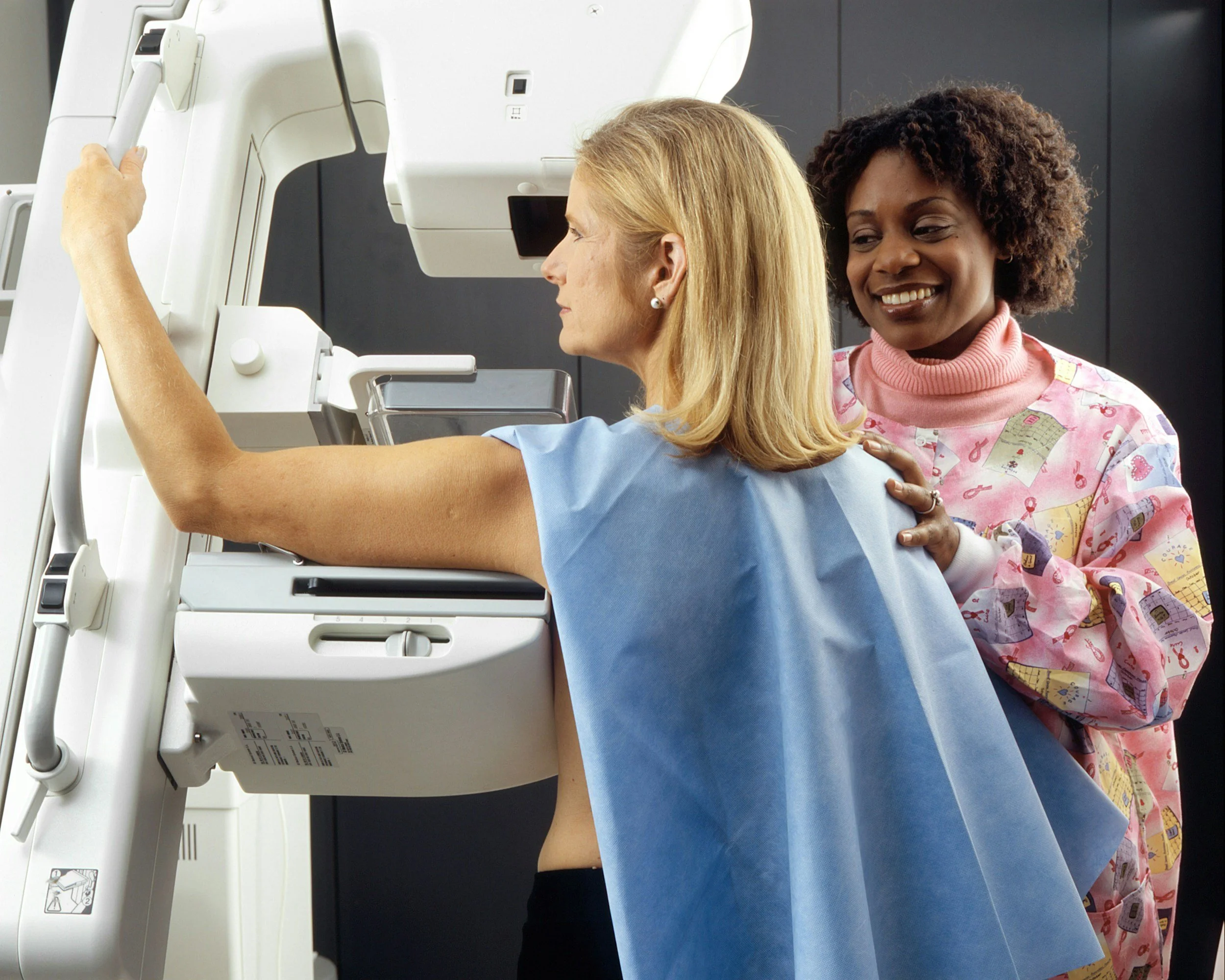
A mammogram is an X-ray of breast tissue that can detect tumors too small to feel. A clinical breast exam is a physical examination by a provider. Breast self-awareness means knowing how your own breasts look and feel and reporting any changes promptly.
Who needs it
All women, with timing and frequency based on individual risk.
When to start and how often
Guidelines vary slightly between organizations, but general consensus includes:
Age 40: Women should have the option to start annual mammograms and be informed of their individual risk. Many guidelines now support starting at 40, especially if you have dense breast tissue or other risk factors.
Age 45–50: Most major organizations recommend beginning regular mammograms by this age at the latest for average-risk women.
Age 45–54: Annual mammograms recommended by the American Cancer Society.
Age 55 and over: Can transition to every 2 years or continue annually based on preference and provider guidance.
High-risk women including those with BRCA1 or BRCA2 gene mutations, a strong family history of breast or ovarian cancer, or prior chest radiation may need to start earlier and may require MRI in addition to mammography. Discuss with your provider.
What to do between mammograms
Breast self-awareness not rigid monthly self-exams, but simply knowing your normal and reporting new lumps, dimpling, nipple discharge, skin changes, or persistent pain to your provider promptly.
Colorectal Cancer Screening
What it is
Colorectal cancer screening looks for cancer or precancerous polyps in the colon and rectum. Several test options exist, from stool-based tests to colonoscopy.
Who needs it
All women. Colorectal cancer is the second most common cause of cancer death in women in the United States.
When to start and how often
Age 45: Current guidelines from the American Cancer Society and the US Preventive Services Task Force recommend beginning colorectal cancer screening at age 45 for average-risk individuals a change from the previous recommendation of age 50.
Screening options include:
Colonoscopy every 10 years.
Annual stool DNA test (Cologuard) or fecal immunochemical test (FIT).
CT colonography every 5 years.
High-risk individuals those with a family history of colorectal cancer, inflammatory bowel disease, or Lynch syndrome may need to start earlier and screen more frequently.
Skin Cancer Screening
What it is
A full-body skin examination by a dermatologist to check for abnormal moles, lesions, or changes that may indicate melanoma or other skin cancers.
Who needs it
All women, particularly those with:
Fair skin, light eyes, or light hair.
A history of significant sun exposure or sunburn.
A personal or family history of skin cancer.
Many moles or atypical moles.
When to start and how often
There is no universally agreed-upon age to begin formal annual skin exams, but most dermatologists recommend:
Starting annual full-body skin checks in your 20s or 30s, especially with risk factors.
Doing regular self-skin checks at home using a mirror to examine all skin surfaces, including the scalp, back, and between toes.
Seeing a dermatologist promptly for any mole that is new, changing, asymmetrical, irregularly bordered, multi-colored, larger than a pencil eraser, or evolving.
Lung Cancer Screening
What it is
A low-dose CT scan of the lungs that can detect early-stage lung cancer before symptoms develop.
Who needs it
Not all women only those with a significant smoking history.
When to start
Current recommendations are for annual low-dose CT lung screening for:
Adults aged 50–80.
Who currently smoke or quit within the past 15 years.
And have a 20 pack-year smoking history (one pack per day for 20 years, or equivalent).
If you meet these criteria, ask your provider about lung cancer screening at your next visit.
Ovarian Cancer: Why There Is No Standard Screening Test
One of the most important and least understood facts in women's cancer screening is that there is currently no recommended routine screening test for ovarian cancer in average-risk women.
CA-125 blood tests and pelvic ultrasounds have been evaluated but have not been shown to reduce ovarian cancer mortality in average-risk populations and can lead to unnecessary procedures.
This makes recognizing symptoms especially important. Symptoms of ovarian cancer include:
Persistent bloating.
Pelvic or abdominal pain.
Difficulty eating or feeling full quickly.
Urinary urgency or frequency.
These symptoms are common and usually not cancer but when they are new, persistent, and happening almost daily, they deserve evaluation.
Women with BRCA1 or BRCA2 mutations or a significant family history of ovarian cancer should discuss individualized surveillance strategies with a specialist.
Endometrial (Uterine) Cancer: Know the Signs
Like ovarian cancer, there is no standard routine screening test for endometrial cancer in average-risk women. The most important thing you can do is report abnormal uterine bleeding promptly.
Warning signs include:
Any vaginal bleeding after menopause.
Irregular or unusually heavy bleeding before menopause.
Bleeding between periods.
These symptoms should never be dismissed as "just hormones" without evaluation, because abnormal uterine bleeding is the most common early symptom of endometrial cancer and when caught early, it is highly treatable.
Women with Lynch syndrome, a history of endometrial hyperplasia, or significant risk factors should discuss screening options with their provider.
Know Your Family History
Family history is one of the most powerful risk factors for many cancers including breast, ovarian, colorectal, and endometrial cancer. If you have first or second degree relatives who have had these cancers, particularly at younger ages, bring that history to your provider.
Genetic testing for BRCA1, BRCA2, Lynch syndrome, and other hereditary cancer syndromes may be appropriate and can significantly change screening recommendations and preventive options.
You do not need to know your full family medical history perfectly. But whatever you do know is worth sharing at every well-woman visit.
How to Stay on Top of Screenings
A few practical strategies:
Keep a simple log of when each screening was done and when the next one is due.
Ask at every annual visit "What screenings am I due for this year?"
Do not skip appointments because you feel fine. Screening is specifically designed for people who feel well.
Follow up on results. If you had a Pap, a mammogram, or any other screening and never received results, call and ask.
Update your family history every few years as new diagnoses emerge in your family.
“This article is based on current medical guidance and research from the following trusted sources:”
Resources & Sources
American Cancer Society Cancer Screening Guidelines-
cancer.org/screening-guidelines
US Preventive Services Task Force Screening Recommendations-
uspreventiveservicestaskforce.org
American College of Obstetricians and Gynecologists (ACOG) Cervical Cancer Screening and Cancer Prevention-
acog.org
National Cancer Institute Cancer Screening Overview-
cancer.gov/about-cancer/screening
Centers for Disease Control and Prevention (CDC) Cancer Screening Recommendations for Women-
cdc.gov/cancer
National Institutes of Health (NIH) / PubMed Cancer screening research and outcomes-
pubmed.ncbi.nlm.nih.gov
When was the last time you had a full screening conversation with your provider not just a Pap, but the whole picture? Share in the comments. Let's normalize talking about screenings the same way we normalize talking about symptoms.
Author
Becky Freeman is the founder of BVTalks® and Bee Vee Clean. She focuses on women’s intimate health, vaginal microbiome education, and creating practical, easy-to-understand content for everyday care.
Disclaimer: This post is for educational purposes only and is not a substitute for professional medical advice. Always consult your healthcare provider for diagnosis and treatment.
