

Birth Control Options: How to Choose the Right Method
Birth Control Options: How to Choose the Right Method
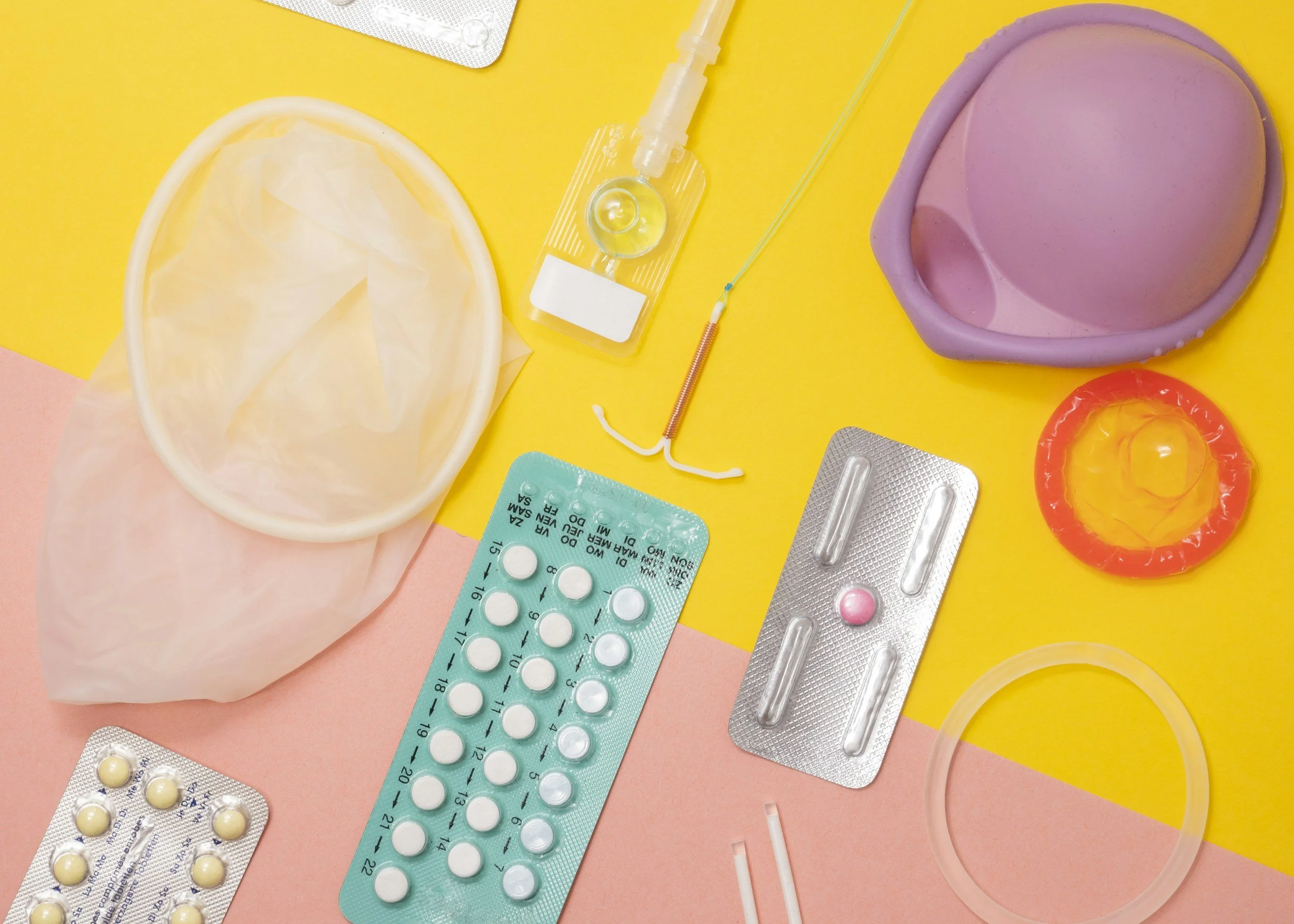
Choosing birth control can feel overwhelming. There are daily pills, weekly patches, monthly rings, injections, implants, intrauterine devices, condoms, fertility-awareness methods, and permanent procedures and each option comes with different benefits, risks, side effects, and responsibilities.
The best birth control method is not necessarily the one your friend uses or the one with the most familiar brand name. It is the method that safely fits your health history, pregnancy plans, menstrual concerns, lifestyle, sexual-health needs, and ability to use it consistently.
This guide compares the major birth control options available in the United States, including how effective they are with typical use, how long they work, whether they contain hormones, and how they may affect your period. It also explains which methods help protect against sexually transmitted infections and when emergency contraception may be useful.
Birth Control Effectiveness
Birth control effectiveness is generally described using two different measurements:
Perfect use means using the method correctly and consistently every time.
Typical use reflects how people use the method in everyday life, including missed pills, late injections, condom errors, and other common mistakes.
A method that requires very little action after it is started tends to have a smaller difference between perfect-use and typical-use effectiveness. This is one reason intrauterine devices and implants are among the most effective reversible methods: users do not have to remember them every day, week, or month.
Approximate first-year typical-use failure rates include:
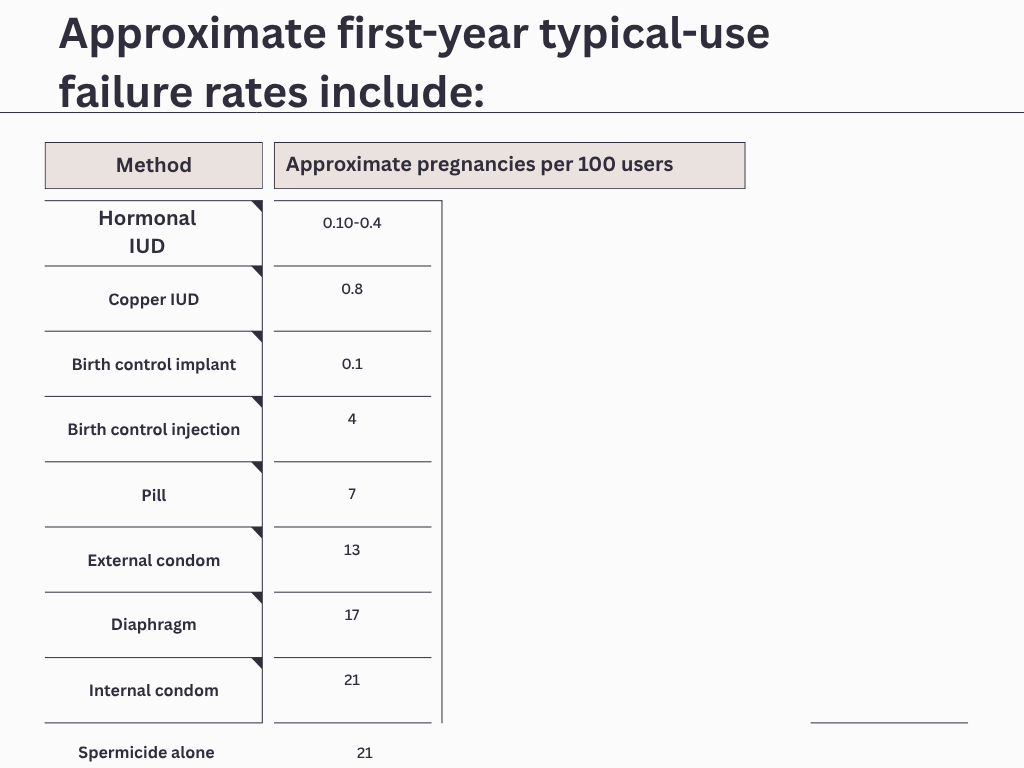
These estimates describe population-level outcomes, not a guarantee for one individual. A method’s real-world effectiveness depends on correct use, whether medications interfere with it, and whether replacements, refills, or injections happen on time.
Long-Acting Birth Control
Long-acting reversible contraception, often shortened to LARC, includes IUDs and the contraceptive implant. These methods prevent pregnancy for several years but can be removed earlier whenever the user wants to stop
Fewer than 1 in 100 users become pregnant during the first year of using an IUD or implant, making these the most effective reversible birth control options. However, effectiveness is only one consideration bleeding preferences, comfort with insertion, hormones, cost, and medical history also matter
Hormonal IUD
A hormonal IUD is a small, T-shaped device that a trained clinician places inside the uterus. It releases a small amount of progestin, which thickens cervical mucus, makes it more difficult for sperm to reach an egg, and thins the uterine lining
Depending on the product, hormonal IUDs are approved for approximately three to eight years of pregnancy prevention. Some can also be used to treat heavy menstrual bleeding
Potential benefits
More than 99% effective
Little daily maintenance
Can make periods lighter or shorter
Some users eventually have very little bleeding
Does not contain estrogen
Can be removed when pregnancy is desired
Possible disadvantages
Requires placement and removal by a clinician
Insertion can cause temporary pain or cramping
Irregular spotting is common during the first several months
Rare complications include expulsion or uterine perforation
Does not protect against sexually transmitted infections
Hormonal IUDs are often considered by people who want reliable contraception and lighter periods. They may not be the right choice for someone with certain uterine abnormalities, unexplained vaginal bleeding, an active pelvic infection, or specific medical concerns that require further evaluation.
Copper IUD
The copper IUD is hormone-free. Copper interferes with sperm movement and function, making fertilization much less likely
The copper IUD can prevent pregnancy for up to 10 years, although it can be removed sooner. Its typical-use failure rate is approximately 0.8%, making it one of the most effective nonhormonal birth control options
Potential benefits
Hormone-free
More than 99% effective
Works for up to 10 years
Does not require daily action
Can serve as emergency contraception when placed within five days of unprotected sex
Fertility is not permanently affected by removal
Possible disadvantages
May make periods heavier, longer, or more painful, especially during the first several months
Requires insertion and removal by a clinician
Does not protect against sexually transmitted infections
May not be ideal for someone who already has very heavy or painful periods
The copper IUD is the most effective form of emergency contraception currently recommended by ACOG and also provides continued birth control after placement. A clinician must determine whether an IUD is medically appropriate and arrange timely insertion.acog+1
Birth Control Implant
The contraceptive implant is a thin, flexible rod placed just beneath the skin of the upper arm. It releases the progestin etonogestrel and prevents pregnancy mainly by suppressing ovulation and thickening cervical mucus.
In January 2026, the FDA extended the approved duration of Nexplanon from three years to five years. The current prescribing information states that it must be removed or replaced by the end of the fifth year
Potential benefits
More than 99% effective
Works for up to five years
Does not contain estrogen
Requires no daily action
Can be removed if the user wants to stop
May be an option for people who cannot use estrogen
Possible disadvantages
Irregular bleeding or spotting is common
Periods may become lighter, heavier, longer, or unpredictable
Requires a trained clinician for insertion and removal
May cause headaches, breast tenderness, acne, or mood changes in some users
Does not protect against sexually transmitted infections
Changes in bleeding are one of the most common reasons people discontinue the implant. A clinician can help determine whether irregular bleeding is an expected side effect or whether pregnancy, infection, medication interactions, or another medical condition should be ruled out.
Birth Control Pills
Birth control pills fall into two primary categories:
Combined pills contain estrogen and progestin.
Progestin-only pills contain no estrogen.
Both require consistent daily use. The CDC estimates that about 7 in 100 pill users become pregnant during the first year with typical use
Combined pills
Combined pills primarily prevent ovulation. They also thicken cervical mucus and create changes in the uterine lining that help prevent pregnancy
Potential benefits include:
Lighter or more predictable periods
Reduced menstrual cramps
Improvement in acne for some users
Less heavy menstrual bleeding
Ability to suppress periods with certain dosing schedules
Reduced risk of ovarian and endometrial cancers
Combined hormonal contraception slightly increases the risk of blood clots, heart attack, and stroke, although the absolute risk remains low for many healthy users. These methods may not be recommended for people with migraine with aura, a history of blood clots or stroke, certain cardiovascular risks, uncontrolled hypertension, or those older than 35 who smoke
A clinician should review your blood pressure, smoking status, migraine history, medications, and personal and family history before prescribing an estrogen containing method.
Progestin-only pills
Progestin-only pills may be suitable for people who cannot or prefer not to use estrogen. They work mainly by thickening cervical mucus, and some formulations also consistently suppress ovulation.
Some progestin-only pills must be taken within a strict daily time window. Because instructions differ between formulations, users should follow the specific package directions and ask a pharmacist or clinician what to do after a late or missed pill.
The United States now has an over-the-counter progestin-only pill called Opill. The FDA approved Opill for nonprescription use in 2023, and it became available without a prescription in 2024. It contains norgestrel, does not contain estrogen, and must be taken every day at the same time for maximum effectiveness
Opill is regular daily contraception, not emergency contraception. Anyone with unexplained uterine bleeding, a history of breast cancer, possible pregnancy, or questions about drug interactions should review the product label carefully and consult a clinician or pharmacist
Birth Control Patch
The birth control patch releases estrogen and progestin through the skin. Traditional schedules use one patch per week for three weeks, followed by a patch-free week, although instructions depend on the specific product
The patch prevents pregnancy primarily by stopping ovulation. With typical use, the failure rate is similar to that of birth control pills and the vaginal ring.cdc+1
Potential benefits
Changed weekly rather than taken daily
May make periods more regular, lighter, and less painful
Can improve some cycle-related symptoms
Does not interrupt sex
Possible disadvantages
Can cause skin irritation
May be visible on the body
Does not protect against sexually transmitted infections
May be less effective at certain body weights depending on the product
Carries estrogen-related risks, including a small increased risk of blood clots
Because the patch contains estrogen, people with migraine with aura, a history of blood clots, certain cardiovascular conditions, or other estrogen contraindications may need a different method
Vaginal Birth Control Ring
The vaginal ring is a flexible device placed inside the vagina, where it releases estrogen and progestin. Depending on the product, a ring may be replaced monthly or reused according to a specific schedule.
Like combined pills and patches, the ring prevents pregnancy mainly by suppressing ovulation. It has similar typical-use effectiveness and similar estrogen-related benefits and risks
Potential benefits
Does not require daily use
Can make periods lighter and more predictable
May reduce menstrual cramps
Can be inserted and removed by the user
Possible disadvantages
Requires remembering ring changes
Can cause spotting, vaginal irritation, or discharge
Contains estrogen
Does not protect against sexually transmitted infections
The ring is placed in the vagina, but it does not need to be positioned in one exact location to work. If it falls out or remains out longer than the product directions allow, backup contraception may be necessary.
Birth Control Injection
The birth control injection contains depot medroxyprogesterone acetate, commonly called DMPA. It is given approximately every three months and prevents pregnancy mainly by suppressing ovulation
The CDC estimates that about 4 in 100 injection users become pregnant during the first year with typical use. Staying on schedule is important because late injections can reduce protection
Potential benefits
No daily pill
Does not contain estrogen
May make periods lighter or stop them over time
May reduce menstrual pain
Can be used privately
Possible disadvantages
Irregular bleeding can occur
Some users experience weight changes
Bone mineral density may decline during use
Return to fertility may take longer after stopping than with some other reversible methods
Requires repeat injections on schedule
Does not protect against sexually transmitted infections
The injection may work well for someone who wants a private method without a daily task but does not want an implanted device. Discuss bone health, medications, pregnancy timing, and other individual risks with a clinician.
Condoms and Barrier Methods
Barrier methods prevent sperm from reaching the egg. These include external condoms, internal condoms, diaphragms, cervical caps, contraceptive sponges, and spermicides.
External condoms have a typical-use failure rate of approximately 13%, meaning about 13 pregnancies occur per 100 users during the first year of typical use. Using condoms correctly from beginning to end of every sexual encounter improves protection
Condoms are especially important because most other birth control options do not protect against sexually transmitted infections. Consistent and correct external latex condom use reduces the risk of HIV and several other infections, including chlamydia, gonorrhea, hepatitis B, and trichomoniasis
Condoms offer less protection against infections spread through uncovered skin-to-skin contact, such as herpes, syphilis, and HPV. Natural-membrane or lambskin condoms can help prevent pregnancy but are not recommended for HIV or STI prevention
Using condoms together with another contraceptive method is called dual protection. For example, using an IUD for highly effective pregnancy prevention and condoms for STI risk reduction addresses two different sexual-health needs.stacks
Fertility-Awareness Methods
Fertility-awareness-based methods involve identifying fertile days using menstrual dates, cervical mucus, basal body temperature, or a combination of signs. Users avoid vaginal sex or use a barrier method during the estimated fertile window.
These methods require education, daily tracking, and consistent cooperation between partners. They may be more difficult when cycles are irregular, during postpartum changes, or when work, illness, sleep disruption, or medications affect fertility signs
Fertility-awareness methods do not protect against sexually transmitted infections. Their effectiveness varies substantially depending on the method and how carefully it is followed.
Permanent Birth Control
Permanent contraception may be appropriate for people who are confident they do not want a future pregnancy.
Options include:
Tubal surgery, which closes or removes the fallopian tubes
Vasectomy, which blocks sperm from entering semen
Tubal surgery has an estimated typical-use failure rate of about 0.5%. Vasectomy is also highly effective, but another contraceptive method is needed until follow-up semen testing confirms the procedure was successful
Permanent contraception should be approached as irreversible even though reversal procedures sometimes exist. A thorough conversation should cover permanence, surgical risks, possible regret, partner options, and highly effective reversible alternatives.
Emergency Contraception
Emergency contraception reduces the chance of pregnancy after unprotected sex, a condom problem, missed birth control, or sexual assault. It does not end an established pregnancy
Main options include:
Copper IUD: The most effective emergency contraceptive when placed within five days of unprotected sex; it also provides long-term contraception
Ulipristal acetate: A prescription pill that can be used up to five days after unprotected sex and maintains effectiveness across that window
Levonorgestrel emergency contraception: Available without a prescription and works best as soon as possible; effectiveness decreases as time passes
After taking ulipristal, users should wait five days before starting or restarting hormonal contraception because using the two together can reduce their effectiveness. Follow the product instructions and use a barrier method for the recommended period
Emergency contraceptive pills do not provide ongoing protection for sex later in the cycle. They also do not protect against sexually transmitted infections.
Choosing a Birth Control Method
There is no single best birth control option for everyone. A useful decision starts with identifying the features that matter most to you.
Ask yourself:
How strongly do I want to avoid pregnancy?
Do I want pregnancy within the next year, several years, or never?
Can I reliably remember a daily pill?
Am I comfortable with a device placed in my uterus or arm?
Do I want lighter periods, or do I want to avoid menstrual changes?
Do I need an estrogen-free option?
Do I have migraines with aura, high blood pressure, or a blood-clot history?
Do I need protection from sexually transmitted infections?
How important are privacy, cost, insurance coverage, and pharmacy access?
Would irregular spotting be difficult for me to tolerate?
Someone who wants maximum pregnancy prevention with almost no maintenance may prefer an implant or IUD. Someone who wants predictable bleeding and can remember a daily medication may prefer a pill, while someone who wants a hormone-free option may consider a copper IUD or barrier method.
The choice should be based on shared decision-making rather than pressure toward one specific method. A clinician should explain reasonable options, answer questions about side effects, and respect the patient’s preferences and reproductive goals.
When to Contact a Clinician
Contact a clinician if you develop severe or persistent symptoms after starting birth control, including:
Very heavy or prolonged bleeding
Severe pelvic or abdominal pain
A missed period with pregnancy symptoms
New migraine with neurological symptoms
Persistent mood changes
Possible exposure to a sexually transmitted infection
Concerns that an IUD has moved or been expelled
Difficulty locating an implant
Side effects that interfere with daily life
Seek urgent medical attention for chest pain, sudden shortness of breath, coughing blood, one-sided leg swelling, sudden severe headache, vision changes, weakness on one side, or difficulty speaking. These can be warning signs of a blood clot, stroke, or another serious condition, particularly in people using estrogen-containing contraception
“This article is based on current medical guidance and research from the following trusted sources:”
Sources and Resources
Centers for Disease Control and Prevention — Contraception and Birth Control Methods
Current descriptions, duration, and typical-use failure rates for IUDs, implants, injections, pills, condoms, and other contraceptive methods.cdc
https://www.cdc.gov/contraception/about/index.htmlCDC — U.S. Selected Practice Recommendations for Contraceptive Use, 2024
Clinical guidance for starting, using, and managing common concerns with contraceptive methods.cdc+1
https://www.cdc.gov/mmwr/volumes/73/rr/rr7303a1.htmACOG — Birth Control
Patient education covering hormonal, nonhormonal, long-acting, barrier, and permanent birth control options.acog
https://www.acog.org/womens-health/faqs/birth-controlACOG — IUD and Implant
Information about long-acting reversible contraception, effectiveness, benefits, risks, and menstrual changes.acog
https://www.acog.org/womens-health/faqs/long-acting-reversible-contraception-iud-and-implantACOG — Combined Hormonal Birth Control
Explains pills, patches, and rings, including benefits, side effects, blood-clot risks, and medical conditions affecting eligibility.acog
https://www.acog.org/womens-health/faqs/combined-hormonal-birth-control-pill-patch-ringFDA — Nexplanon Prescribing Information
Current FDA-approved labeling confirming that the contraceptive implant may be used for up to five years.accessdata.fda+1
https://www.accessdata.fda.gov/drugsatfda_docs/label/2026/021529s028lbl.pdfFDA — Opill Information
Safety and use information for the first FDA-approved nonprescription daily oral contraceptive in the United States.fda+1
https://www.fda.gov/drugs/postmarket-drug-safety-information-patients-and-providers/opill-0075mg-oral-norgestrel-tablet-informationACOG — Emergency Contraception
Explains copper IUDs, ulipristal, levonorgestrel, timing, effectiveness, and follow-up contraception.acog+1
https://www.acog.org/womens-health/faqs/emergency-contraceptionCDC — Primary Prevention Methods
Evidence-based guidance on condoms and reducing the risk of HIV and other sexually transmitted infections.cdc
https://www.cdc.gov/std/treatment-guidelines/clinical-primary.htmOffice on Women’s Health — Birth Control Methods
Comparison of contraception types, effectiveness, frequency of use, possible side effects, and risks. womenshealth
https://womenshealth.gov/a-z-topics/birth-control-methods
These resources may be updated as products, approvals, and medical guidelines change. Readers should confirm current instructions with their own clinician, pharmacist, or the official product label.
Author
Becky Freeman is the founder of BVTalks® and Bee Vee Clean. She focuses on women’s intimate health, vaginal microbiome education, and creating practical, easy-to-understand content for everyday care.
Disclaimer
This article is for education only and is not a substitute for personal medical advice. Always talk to your own clinician about your symptoms and treatment options.
