

Early Perimenopause vs “Just Bad PMS”: How to Recognize the Transition in Your 30s and 40s
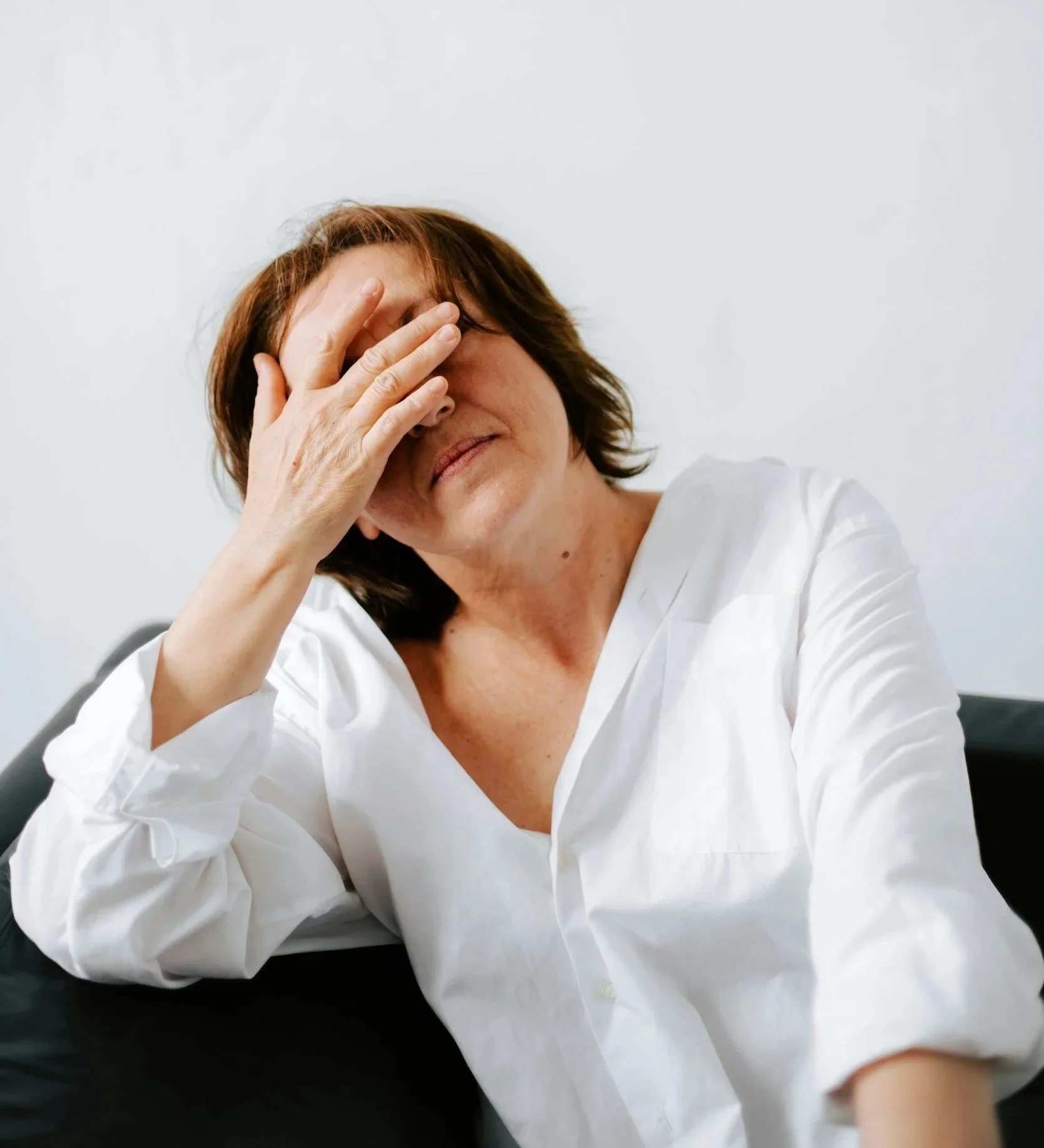
Your period has always been a little annoying cramps, bloating, mood dips. But lately it feels different.
You’re more exhausted. Your mood swings last longer. Your flow is changing. Some months your period shows up early, others it ghosts you entirely. You’re Googling things like “Can PMS suddenly get worse in your 40s?” and “Am I too young for perimenopause?”
Here’s the hard and helpful truth:
Yes, perimenopause can start in your late 30s or 40s.
Yes, it can make PMS feel worse and less predictable.
And no, you’re not imagining it.
This post breaks down:
What PMS actually is and how it behaves
What perimenopause is and how early signs show up
How to tell the difference when symptoms overlap
When it’s time to ask, “Is this still PMS or is this the transition?”
What you can do to feel more in control
PMS 101: The “Classic” Pattern
Premenstrual syndrome (PMS) is a collection of physical and emotional symptoms that show up in the luteal phase the days before your period and resolve shortly after bleeding starts.
Typical PMS:
Timing: Symptoms begin about 5–10 days before your period and improve within a few days after it starts.
Symptoms: Mood swings, irritability, feeling overwhelmed, tearfulness, anxiety, breast tenderness, bloating, headaches, cravings,
Cycle pattern: Your cycles are mostly regular (e.g., every 26–32 days), and PMS follows a predictable pattern month to month
The key feature: PMS is tied tightly to your period. Symptoms rise as you approach bleeding and fall as your period gets
If your symptoms are annoying but:
Happen at roughly the same time every cycle
Clear within a few days of your period starting
…you’re likely dealing with classic PMS even if it’s unpleasant
What Perimenopause Actually Is
Perimenopause is the transition leading up to menopause, when your ovaries start producing inconsistent amounts of estrogen and progesterone and your cycles stop behaving like clockwork.
Key facts:
It can start as early as the late 30s, but more commonly begins between 40 and 45.
It often lasts 4–8+ years before you reach menopause (defined as 12 months without a period).
The first sign for many women is irregular periods cycles that come earlier or later than usual, get heavier or lighter, or occasionally go missing.
During this transition:
Estrogen and progesterone fluctuate more wildly, not just in the usual rise‑and‑fall pattern of a regular cycle.
Some cycles are anovulatory (no ovulation), which changes how progesterone behaves and affects PMS‑style symptoms.
Perimenopause doesn’t flip on overnight. It sneaks in as small irregularities and new symptoms especially in your late 30s and 40s.
Early Signs That It Might Be Perimenopause (Not Just PMS)
PMS and perimenopause share a long list of symptoms: mood swings, breast tenderness, bloating, headaches, fatigue, joint aches, and more.
So the question isn’t, “Do I have PMS or perimenopause?” It’s: “Is PMS happening within a stable cycle, or inside a bigger hormonal transition?”
Clues that early perimenopause may be joining the party:
Your Cycle Starts Misbehaving
According to Cleveland Clinic and other sources, irregular periods are the hallmark sign of perimenopause.
Look for patterns like:
Periods coming earlier or later by 7+ days compared with your usual schedule
Cycles that shorten (e.g., every 21–24 days) or lengthen (e.g., gaps of 35–60 days)
Occasional cycles with no bleeding at all, followed by a heavier or longer period
Bleeding that’s suddenly much heavier or lighter than your norm
Early perimenopause is often defined by persistent changes in cycle length repeated shifts of 7 or more days, or skipped cycles not just one late period during a stressful month.
If your PMS seems to ride on top of increasingly chaotic cycles, the transition may be underway.
New Symptoms Show Up Outside Your PMS Window
PMS is a pre‑period phenomenon. Symptoms appear in the days before bleeding and resolve shortly after.
Perimenopause, in contrast, often introduces symptoms that pop up any time in the month, not just pre‑period:
Hot flashes and night sweats that wake you at 3 a.m.c
Sleep problems that don’t map neatly to your luteal phase
Brain fog and memory lapses in the middle of your cycle
Palpitations, anxiety spikes, or “doom feeling” that aren’t tied only to the week before your period
Joint pain, new headaches, or changes in libido appearing more randomly
Healthline’s expert summary notes: PMS symptoms cluster before a period; perimenopause symptoms often persist across the month and feel more erratic.
If you notice that some symptoms now stick around after your period, or appear at random times, those are more likely perimenopause‑related than classic PMS
Your PMS Feels Like It’s Been Put on Steroids
Perimenopause doesn’t just add new symptoms; it can intensify existing PMS.
Studies and clinical experience suggest:
Women often become more sensitive to hormonal fluctuations during perimenopause.
PMS can become more severe, longer‑lasting, and less predictable.
Emotional symptoms rage, anxiety, feeling overwhelmed can feel amplified and harder to shake.
One review from Dr. Louise Newson’s team notes that perimenopause can worsen PMS and PMDD, especially emotional and psychological symptoms, and spread them across more of the cycle as ovulation becomes irregular.
If PMS has gone from “annoying but manageable” to “you don’t recognize yourself” in your 40s, that’s not weakness that’s hormonal turbulence.
PMS vs Perimenopause: Key Differences in Timing and Pattern
Here’s a way to visualize it using what multiple sources emphasize

Remember: you can absolutely have both PMS and perimenopause at the same time. It’s not either/or it’s “PMS inside perimenopause.”
When It’s Probably Still PMS
Even in your late 30s or 40s, it may still be mostly PMS if:
Your cycles are regular and haven’t changed much in length or flow.
Symptoms still cluster in the week before your period and reliably improve once bleeding starts.
You don’t have hot flashes, night sweats, or major cycle irregularity.
Your mood and energy feel mostly normal outside the pre‑period window.
In that case, focusing on PMS and PMDD tools nutrition, exercise, sleep, CBT, targeted medication, and sometimes cyclical hormone strategies may be the main approach.
When It’s Probably Early Perimenopause (Not Just “Worse PMS”)
Consider perimenopause likely if:
Your cycle has changed in the last few years (shorter, longer, skipped, heavier/lighter).
You have hot flashes or night sweats, especially at night or out of the blue.
You’re seeing new symptoms: brain fog, palpitations, sleep disruption, vaginal dryness, urinary urgency, joint pain.
Emotional symptoms (rage, anxiety, low mood) feel more intense and less tied to just the days before your period.
Your pre‑period symptoms linger after your period or show up earlier than they used to.
If this sounds familiar, you’re likely dealing with perimenopause + PMS, not just “bad PMS.”
What You Can Do When You’re Not Sure Which It Is
Track Patterns for 3–6 Months
Use a period app or simple notebook to log:healthline+3
Cycle length (first day of bleeding to the next first day)
Flow (light/normal/heavy, clots)
Symptom timing (when mood changes, hot flashes, sleep issues, pain appear and resolve)
Patterns often reveal whether your symptoms are:
Mostly pre‑period and predictable → more PMS
Scattered across the month + cycle irregularity → more perimenopause
Bring Language That Connects Both
At a visit, you might say:
“Over the past couple of years, my periods have become more irregular and my premenstrual symptoms are more intense and lasting longer. I’m also having new symptoms like night sweats/brain fog/palpitations. I’d like to talk about whether this is early perimenopause and how we can manage both PMS and the transition.
Ask for:
A review of your cycle history and symptoms
Basic labs if indicated (not to “diagnose” perimenopause it’s mostly clinical but to rule out thyroid, anemia, etc.)
Discussion of PMS/PMDD treatments and perimenopause support (sleep, vasomotor symptoms, mood, vaginal changes)
Treat Symptoms Even If the Label Is Fuzzy
Whether it’s PMS, perimenopause, or both, you still deserve relief.
Options might include:
Lifestyle strategies: exercise, nutrition, sleep hygiene
CBT or other therapy to help with mood swings, anxiety, and feeling “possessed” by hormones
SSRIs, SNRIs, or other medications when mood or anxiety meet criteria for a disorder
Hormonal strategies: combined hormonal contraceptives, cyclical progesterone, or menopausal hormone therapy in the right context
The goal is not perfection; it’s reducing the intensity and unpredictability so you can actually live your life
When to Seek More Urgent Help
Regardless of whether it’s PMS or perimenopause, reach out urgently if you experience: Thoughts of self‑harm or suicide
Severe depression, panic attacks, or inability to function at work or home
Extreme mood swings that feel out of control or raise safety concerns
Hormone changes are powerful, but you don’t have to face their mental health impact alone.
The Bottom Line
PMS and perimenopause share many symptoms, which is why the line between them can feel blurry.
The key differences are timing, cycle pattern, and new symptoms: PMS sticks to the pre‑period window in a regular cycle; perimenopause disrupts the cycle and adds symptoms that show up all month.
If your PMS has gotten dramatically worse, your cycles are more chaotic, and new hot flashes, sleep problems, or brain fog have joined the party, there’s a good chance the transition has begun and you’re allowed to get help for both.
You’re not “too young” to be taken seriously.
You’re in a real hormonal shift, and you deserve care that respects both your cycle and your future.
“This article is based on current medical guidance and research from the following trusted sources:”
Resources & Sources
Healthline – How Can I Tell the Difference Between Perimenopause and PMS Symptoms?
https://www.healthline.com/health/menopause/perimenopause-vs-pmshealthlineBonafide – The Difference Between Perimenopause and PMS Symptoms.
https://hellobonafide.com/blogs/news/perimenopause-and-pms-symptomshellobonafidePerelel Health – Perimenopause vs PMS: How to Recognize the Transition.
https://perelelhealth.com/blogs/news/perimenopause-vs-pms-how-to-recognize-the-transition-in-your-30s-and-40sperelelhealthTestmottagningen – Early Signs of Perimenopause and How to Distinguish Them From PMS.
https://www.testmottagningen.se/en/artiklar/kvinnohalsa/tidiga-tecken-pa-perimenopaus-sa-skiljer-du-dem-fran-pms/testmottagningenGrowing Stages Therapy – Symptoms of PMS, Perimenopause and Menopause (comparative handout).
https://www.growingstagestherapy.com/storage/app/media/Handouts/symptoms-of-premenstrual-syndrome-pms-perimenopause-and-menopause.pdfgrowingstagestherapyUnderstanding PMS Symptoms During Perimenopause – Clinical Guide.
https://mlrb.net/pms-symptoms-during-perimenopause/mlrbPMS in the Perimenopause – PubMed Review.
https://pubmed.ncbi.nlm.nih.gov/15667751/pubmed.ncbi.nlm.nihDr Louise Newson – PMS, PMDD and Menopause.
https://www.drlouisenewson.co.uk/knowledge/pms-pmdd-and-menopausedrlouisenewson.coCleveland Clinic – Perimenopause: Age, Stages, Signs, Symptoms & Treatment.
https://my.clevelandclinic.org/health/diseases/21608-perimenopauseclevelandclinicBodyLogicMD – Is PMS Worse During Perimenopause?
https://www.bodylogicmd.com/blog/is-pms-worse-during-perimenopause-why-its-not-just-your-imagination/
Author
Becky Freeman is the founder of BVTalks® and Bee Vee Clean. She focuses on women’s intimate health, vaginal microbiome education, and creating practical, easy-to-understand content for everyday care.
Disclaimer: This article is for education only and is not a substitute for personal medical advice. Always talk to your own clinician about your symptoms and treatment options.
