
Is It Perimenopause or Anxiety? How to Tell What’s Really Going On
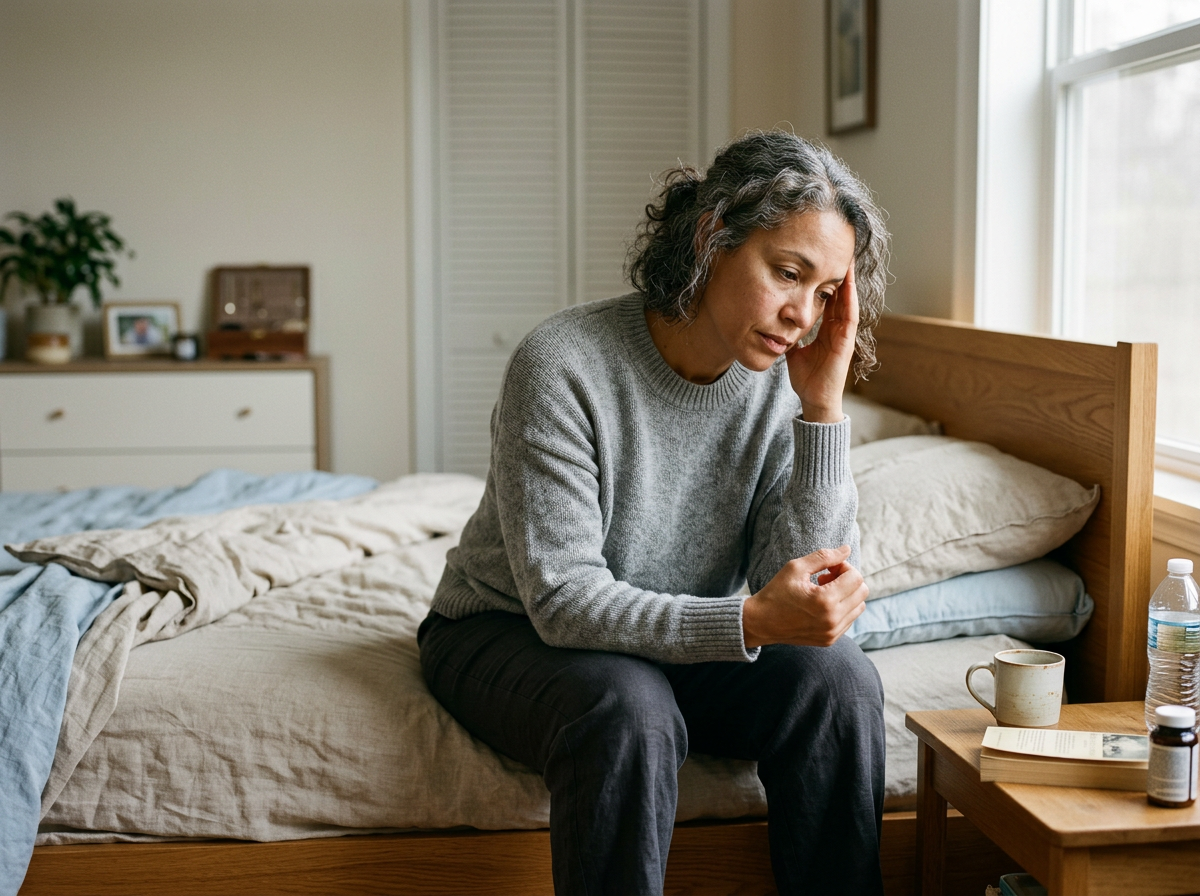
You’re in your late 30s or 40s and suddenly:
Your heart races for no reason.
You wake at 3 a.m. with a sense of dread and can’t fall back asleep.
Your brain won’t stop looping worries about work, kids, money, health.
Maybe you’ve never had anxiety before and now it feels like your default setting. Or you’ve always been a little anxious, but recently it’s like someone turned the volume up to 10.
The question that keeps coming up for women in this age range:
Is this “anxiety,” or is it perimenopause?
The short answer: it’s often both. The hormonal chaos of perimenopause can trigger new anxiety or intensify existing anxiety and the two are tightly
This post breaks down:
What perimenopause is and why it’s a vulnerable time for anxiety
How perimenopause‑related anxiety can look different from lifelong anxiety
How to tell when it might be something else (like thyroid or heart)
What actually helps beyond “just try to calm down”
First: What Perimenopause Actually Is
Perimenopause is the transition phase before menopause when reproductive hormones start to fluctuate and eventually decline.
Key features:
Cycles become shorter, longer, irregular, or skip entirely
Estrogen and progesterone swing up and down rather than following a smooth monthly pattern
Some cycles are anovulatory (no ovulation), which changes progesterone levels
This transition can last 4–8 years, often beginning in the 40s but sometimes in the late 30s.
Multiple large reviews show the menopause transition is a vulnerable period for both depression and anxiety, especially in women who already have some mental health history or significant vasomotor symptoms (hot flashes, night sweats).
So if anxiety suddenly arrives or old anxiety gets much worse in midlife, perimenopause is a real part of the story, not an excuse.
How Perimenopause Can Trigger Anxiety
It’s not “all in your head.” There are clear biological and psychosocial drivers.
Hormonal Fluctuations
Estrogen and progesterone both influence systems that regulate anxiety:
Estrogen modulates serotonin and dopamine neurotransmitters that help balance mood, motivation, and emotional regulation.
Progesterone metabolizes into allopregnanolone, which acts on GABA receptors and has calming, anti‑anxiety effects
In perimenopause:
Estrogen and progesterone don’t just decline; they spike and crash, sometimes rapidly.
These swings can destabilize serotonin and GABA signaling and make the brain more prone to anxiety and mood lability.
Systematic reviews suggest menopause increases vulnerability to both depression and anxiety, especially when vasomotor symptoms and sleep problems are present.
Sleep Disruption
Perimenopause is strongly linked to sleep disturbance: difficulty falling asleep, frequent night waking, and non‑restorative sleep.
Hot flashes and night sweats wake you up physically.
Hormonal shifts can alter circadian rhythms and increase 3–4 a.m. awakenings.
Chronic sleep loss is a direct risk factor for anxiety and amplifies baseline worry and reactivity.
3. Vasomotor Symptoms (Hot Flashes)
Hot flashes can feel like panic attacks: racing heart, sudden heat, sweating, discomfort, and a sense that something is wrong.
Multiple studies show that severe vasomotor symptoms and poor sleep are significant risk factors for depressive and anxiety symptoms over the menopause transition.
Life Stress and Role Changes
Midlife often brings:
Caregiving for children and aging parents
Relationship changes, divorce, or dating again
Career stress, ageism, financial concerns
A large review from Brigham and Women’s Hospital emphasizes that vasomotor symptoms, sleep disturbance, and life stressors together predict higher risk of depression and anxiety in the menopause transition.
So perimenopause anxiety usually isn’t “just hormones” or “just stress” it’s the intersection of both.
What Perimenopause Anxiety Feels Like (Versus Lifelong Anxiety)
There is no universal experience, but patterns emerge.
Common Perimenopause Anxiety Patterns
Women often describe
New anxiety in their 40s or early 50s without a prior history
Worsening of existing anxiety that used to be manageable
Racing thoughts focused on kids, health, finances, aging
Heart palpitations pounding, fluttering, or racing heartbeat, sometimes worse at night
3–4 a.m. awakenings with a sense of dread or impending doom
Anxiety flares that coincide with hot flashes, night sweats, or cycle changes
Emotional symptoms (nervousness, irritability, fear) plus physical symptoms (GI upset, trembling, sweating, chest tightness)
In the HUNT‑II and other cohort studies, anxiety scores tended to peak in perimenopause, especially in women with vasomotor symptoms and sleep disturbance.
How It Can Differ from Lifelong Anxiety
Perimenopause‑linked anxiety is more likely to:
Be new‑onset in midlife rather than lifelong
Fluctuate with hormonal changes and vasomotor symptoms (worse during certain cycle phases or hot‑flash heavy weeks)
Coexist with other menopause symptoms: irregular periods, hot flashes, night sweats, brain fog, joint pain, vaginal changes
By contrast, generalized anxiety disorder (GAD) often:
Begins earlier in life
Involves chronic, wide‑ranging worry across many domains, not tied specifically to hormonal shifts
May not be accompanied by vasomotor symptoms or other menopause signs
That said, perimenopause can unmask or intensify pre‑existing anxiety, so many women have overlap
Could It Be Something Else? Red Flags Not to Ignore
It’s crucial not to assume every midlife symptom is “just perimenopause.” Some medical conditions mimic anxiety and need specific work‑ups.
Thyroid Disorders
Hyperthyroidism can look like anxiety:
Palpitations
Tremor
Heat intolerance
Weight loss despite normal or increased appetitehopkinsmedicine+1
Guidelines emphasize checking TSH and free T4 when new‑onset anxiety appears, especially with physical overactivity symptoms
Cardiac Issues
Heart rhythm problems (arrhythmias) and other cardiac issues can cause:
Racing heart
Chest discomfort
Shortness of breath
Lightheadedness
These are often misattributed to anxiety in midlife women.
Any chest pain, fainting, or severe palpitations warrant cardiology evaluation.
Serious Mental Health Conditions
Red flags for more than menopause‑related anxiety
Thoughts of suicide or self‑harm
Periods of extremely elevated mood, decreased need for sleep, and risky behavior (possible bipolar disorder)
Severe functional impairment: unable to work, care for yourself, or maintain relationships
These require urgent mental health assessment, not just hormone discussion.
Is It “Just Anxiety,” “Just Perimenopause,” or Both?
In reality, the line is blurry. The best approach is both/and:
Recognize perimenopause as a hormonal and life‑stage context that increases vulnerability to anxiety
Treat anxiety as a real condition worth addressing, not something to “muscle through” because it’s “just hormones
Harvard’s review on mental health over the menopause transition emphasizes that clinicians shouldn’t automatically attribute all mood and anxiety symptoms to menopause, but they also shouldn’t ignore the transition as a key context
You deserve a plan that acknowledges both.
What Actually Helps (Beyond “Relax More”)
Evidence points to a combined approach: address sleep and vasomotor symptoms, treat anxiety directly, and consider hormone therapy when appropriate
Tackle Sleep and Hot Flashes
Because sleep and vasomotor symptoms are major drivers of mood and anxiety, controlling them reduces overall distress
Cool bedroom, layered bedding, and breathable fabrics to minimize wake‑ups.
Limiting alcohol and caffeine, especially in the afternoon and evening, which worsen hot flashes and sleep
Non‑hormonal medications (like certain SSRIs/SNRIs, gabapentin, clonidine) can reduce hot flashes for some women
Hormone therapy (HT) for appropriate candidates can significantly cut vasomotor symptoms and improve sleep, which indirectly helps anxiety
Evidence‑Based Therapy
Cognitive‑behavioral therapy (CBT) and related approaches have strong evidence for treating anxiety disorders and sleep problems in midlife women
CBT can help you:
Catch catastrophizing thoughts (“Something terrible will happen”)
Break cycles of avoidance and safety behaviors
Directly target nighttime anxiety and 3 a.m.
Harvard’s review notes CBT is an effective intervention for mood disorders, vasomotor symptom distress, and insomnia across the menopause transition
SSRIs and SNRIs
Antidepressants are often first‑line for anxiety disorders and can be highly effective in perimenopausal women
SSRIs (e.g., sertraline, escitalopram) and SNRIs (e.g., venlafaxine, desvenlafaxine) treat anxiety and depression.
Several SSRIs/SNRIs also reduce hot flashes, making them dual‑purpose. or accompanied by depression.
Hormone Therapy (HT)
Estrogen‑based therapy is not a stand‑alone anxiety treatment, but research suggests it may help some women when anxiety is closely tied to vasomotor symptoms and sleep disruption
Transdermal estradiol, sometimes combined with micronized progesterone, may reduce mood and anxiety symptoms in some midlife women.
HT is not recommended as the primary treatment for depressive or anxiety disorders in guidelines, but can be part of a broader plan for symptomatic women in the right risk category
Important: HT has contraindications (e.g., hormone‑sensitive cancer, clot history, certain cardiovascular disease). A full risk assessment is essential
Lifestyle and Nervous System Support
Regular exercise (including strength training) improves mood and reduces anxiety, with robust evidence across midlife
Stress management practices (yoga, mindfulness, tai chi, paced breathing) help recalibrate the stress response
Reducing alcohol and nicotine, which worsen anxiety over time
These don’t replace therapy or medication when needed, but they amplify benefits and reduce relapse risk.
How to Talk to Your Doctor About This (Without Being Dismissed)
You are allowed to say, “I think perimenopause might be part of my anxiety and I want to consider both.”
Consider using language like:
“I’m in my 40s/early 50s, my periods have changed, and I’m having new or worse anxiety racing thoughts, palpitations, 3 a.m. wake‑ups. I’d like to explore whether perimenopause is contributing and what a combined plan could look like: labs to rule out thyroid/heart issues, options for therapy or medication, and whether hormone therapy makes sense for me.
Ask specifically about:
Basic labs: TSH, free T4, CBC, metabolic panel, and, if indicated, ECG for palpitations
Referral to a mental health professional for CBT or medication management
Discussion of vasomotor and sleep symptoms and treatment options
Whether you are in the “window of opportunity” for HT and whether it fits your risk profile
If your concerns are brushed off as “just stress” without a conversation, it’s reasonable to seek a clinician with more expertise in menopause and women’s mental health.
The Bottom Line
Perimenopause is a known vulnerable period for depression and anxiety especially when hot flashes, poor sleep, and life stress pile up
New or worsening anxiety in your 40s and early 50s is common, real, and treatable. It is not something you have to just endure
The best approach is not “either/or” but “both/and”: recognize the hormonal and life‑stage context, and treat anxiety with the same seriousness you would at any age
You’re not imagining it. You’re not weak. You’re in one of the most intense transitions your body goes through and you’re allowed to get help.
“This article is based on current medical guidance and research from the following trusted sources:”
Resources & Sources
Alblooshi S et al. – Does Menopause Elevate the Risk for Developing Depression and Anxiety? Systematic Review.
https://pmc.ncbi.nlm.nih.gov/articles/PMC10088347/pmc.ncbi.nlm.nihEuropean Psychiatry – Impact of Symptomatic Menopausal Transition on Depression, Anxiety, and Sleep Disorders.
https://pmc.ncbi.nlm.nih.gov/articles/PMC10594314/pmc.ncbi.nlm.nihBrigham and Women’s Hospital – Review: Mental Health Over the Menopause Transition.
https://www.brighamhealthonamission.org/2024/04/16/review-mental-health-over-the-menopause-transition/brighamhealthonamissionMenopause and Mental Health – Narrative Review (NIH).
https://pmc.ncbi.nlm.nih.gov/articles/PMC12237151/pmc.ncbi.nlm.nihHopkins Medicine – Perimenopause and Anxiety.
https://www.hopkinsmedicine.org/health/wellness-and-prevention/perimenopause-and-anxietyhopkinsmedicineJumpstartMD – Perimenopause Anxiety: Why It Happens and How to Find Relief.
https://jumpstartmd.com/hub/menopause-symptoms/perimenopause-anxietyjumpstartmdInflexxion Health – Perimenopause Anxiety: Why It Happens and How to Find Support.
https://inflexxionhealth.com/blog/anxiety-and-menopauseinflexxionhealthMidi Health – Complete Guide to Perimenopause Anxiety.
https://www.joinmidi.com/post/perimenopause-anxietyjoinmidiFlo Health – Heart Palpitations in Perimenopause.
https://flo.health/menstrual-cycle/menopause/symptoms/heart-palpitations-perimenopausefloPromoting Good Mental Health Over the Menopause Transition – Lancet/University of Melbourne Review.
https://medicine.unimelb.edu.au/__data/assets/pdf_file/0007/4873930/Menopause-3_1-s2.0-S0140673623028015-main.pdf
Author
Becky Freeman is the founder of BVTalks® and Bee Vee Clean. She focuses on women’s intimate health, vaginal microbiome education, and creating practical, easy-to-understand content for everyday care.
Disclaimer: This post is for educational purposes only and is not a substitute for professional medical advice. Always consult your healthcare provider for personalized guidance
