

Hormonal Acne in Your 30s: Causes and What Actually Clears It
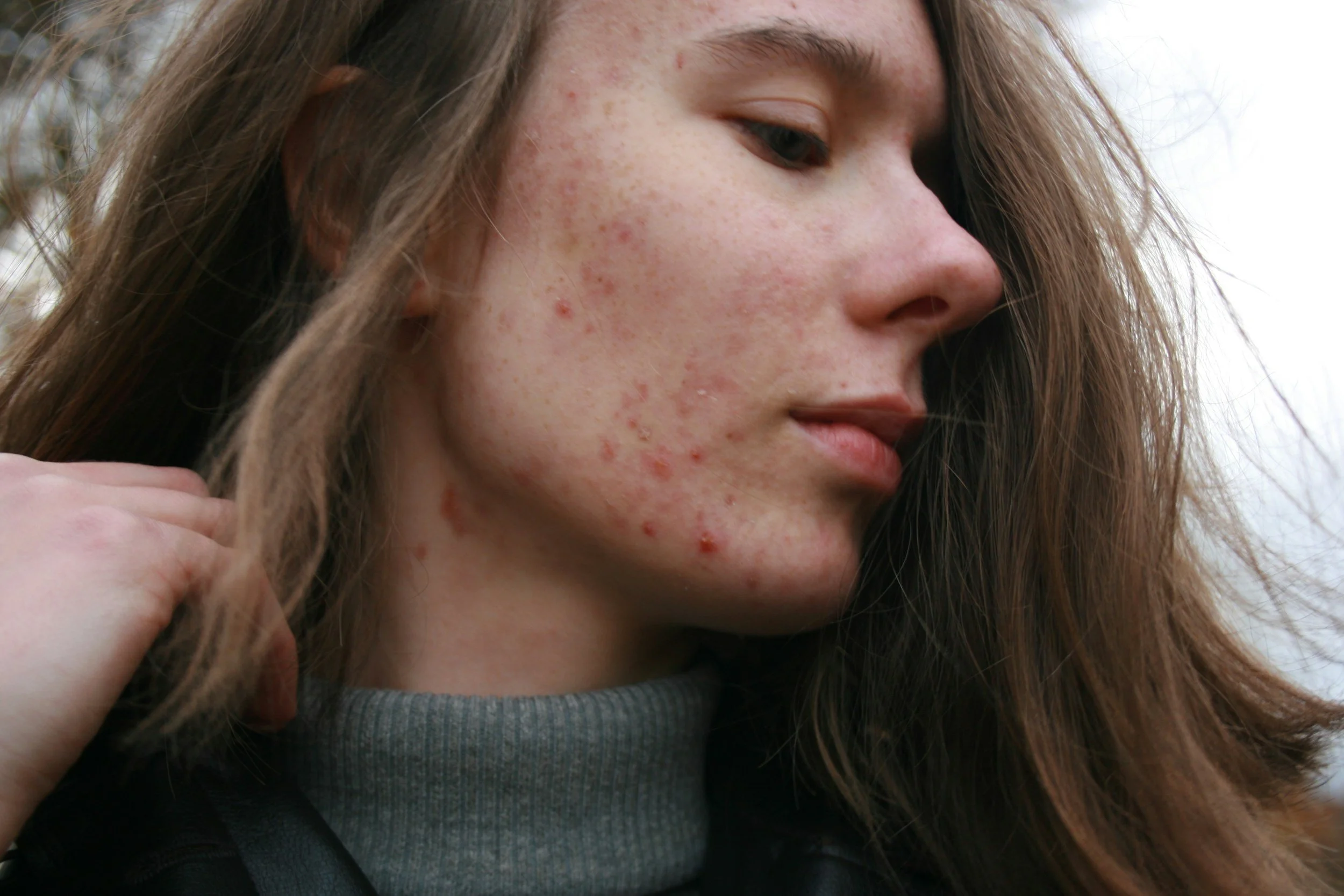
You made it through your teenage years with relatively clear skin. You did the work the face wash, the spot treatments, the dermatologist visits. And then, somewhere in your late 20s or 30s, acne came back. Not the same scattered teenage breakouts this is something different. Deeper. More painful. Concentrated along your jawline, chin, and neck. Appearing like clockwork in the week before your period. Leaving marks that take weeks to fade.
Welcome to hormonal acne one of the most frustrating, most misunderstood, and most undertreated skin conditions affecting adult women. And one that has nothing to do with how well you wash your face
What Is Hormonal Acne?
Hormonal acne is acne driven primarily by fluctuations in reproductive hormones particularly androgens (testosterone and related hormones) and their effect on sebaceous (oil) glands in the skin.
Unlike teenage acne which is driven by the surge of androgens at puberty and tends to affect the forehead, nose, and chin broadly hormonal acne in adult women has a characteristic distribution: primarily the lower face, jawline, chin, and neck. It tends to present as:
Deep, painful cystic nodules that never fully come to a head
Inflammatory papules and pustules along the jaw and chin
Breakouts that appear or worsen in the week before menstruation
Lesions that heal slowly and leave post-inflammatory hyperpigmentation (dark marks)
Hormonal acne can occur at any adult age it is most common in women in their 20s and 30s but frequently persists into the 40s and even beyond. It is the most common form of adult female acne, affecting an estimated 50% of women in their 20s and 25% of women in their 40s.
The Hormonal Mechanism Behind Adult Acne
To understand why hormonal acne forms and why standard acne treatments often fail to clear it you need to understand what androgens do to your skin.
Androgens and sebum production
Androgens particularly testosterone and its more potent derivative dihydrotestosterone (DHT) bind to androgen receptors in sebaceous glands and stimulate them to produce more sebum (oil). Excess sebum mixes with dead skin cells inside the pore, creating a plug that provides the perfect anaerobic environment for Cutibacterium acnes (formerly Propionibacterium acnes) bacteria to proliferate triggering the inflammatory response that produces acne lesions.
Why the jawline and lower face?
The sebaceous glands along the jawline and lower face have a higher concentration of androgen receptors than those in other areas making them more reactive to androgen fluctuations. This is why hormonal acne concentrates there even when the rest of the face is relatively clear.
Why before your period?
In the week before menstruation, progesterone levels peak and then fall rapidly while estrogen also declines. This hormonal shift has several acne-promoting effects:
Progesterone stimulates sebum production
Declining estrogen reduces its natural anti-androgenic effect on skin
The net result is a relative increase in androgenic influence on sebaceous glands precisely when many women notice breakouts forming
Causes and Contributing Factors
Several hormonal conditions and life circumstances drive hormonal acne:
PCOS (Polycystic Ovary Syndrome)
PCOS is characterized by elevated androgens making it one of the most common underlying causes of severe, persistent hormonal acne in adult women. If your jawline acne is severe, accompanied by irregular periods, excess facial or body hair, or weight changes, PCOS screening is warranted.
Perimenopause
As estrogen declines during perimenopause, its natural balancing effect on androgens diminishes. Many women experience a resurgence of acne in their late 30s and 40s that they had not seen since adolescence driven by this shifting hormonal ratio.
Stopping Hormonal Birth Control
The combined oral contraceptive pill suppresses androgen production and increases SHBG (which binds and deactivates testosterone). When women stop the pill particularly after years of use androgen levels temporarily rebound, sometimes dramatically, producing post-pill acne flares that can be severe and prolonged.
Insulin Resistance
Elevated insulin levels stimulate androgen production from the ovaries the same mechanism behind PCOS-related androgen excess. Women with insulin resistance or prediabetes frequently experience hormonal acne as part of the broader metabolic picture.
Stress
Chronic cortisol elevation stimulates adrenal androgen production particularly DHEA-S which drives sebum production and acne independent of ovarian hormone fluctuations. This is why stress-related acne flares are real and common.
What Actually Works for Hormonal Acne
Standard acne treatments benzoyl peroxide, salicylic acid, basic retinoids — address the bacterial and pore-clogging components of acne but do not address the hormonal driver. This is why so many women feel like nothing works for their adult acne. Here is what the evidence actually supports:
Topical Retinoids (Tretinoin, Adapalene)
Retinoids vitamin A derivatives are among the most effective topical acne treatments available. They work by increasing skin cell turnover, preventing pore clogging, and reducing inflammation. Prescription tretinoin is more potent; adapalene (Differin) is available over the counter at 0.1% strength. Both require 12–16 weeks of consistent use to see full results and cause initial purging a temporary worsening before improvement that deters many women before they reach the results phase.
Hormonal Treatments Addressing the Root Cause
Spironolactone the most effective prescription treatment for hormonal acne in women; an anti-androgen medication that blocks testosterone receptors in sebaceous glands, directly reducing sebum production; typically prescribed at 50–200mg daily; requires a prescription and is not appropriate during pregnancy
Combined oral contraceptive pill pills containing drospirenone (Yaz, Yasmin) or norgestimate (Ortho Tri-Cyclen) have FDA approval for acne treatment; they work by increasing SHBG and reducing free testosterone; highly effective for cycle-related hormonal acne
Low-dose isotretinoin for severe, scarring hormonal acne that has not responded to other treatments; requires strict pregnancy prevention due to severe teratogenicity
Dietary Interventions With Evidence
Low glycemic index diet multiple randomized controlled trials have shown that reducing high-glycemic foods (sugar, white bread, processed carbohydrates) reduces acne severity by lowering insulin-driven androgen production; this is not anecdote it is replicated clinical evidence
Dairy reduction particularly skim milk, which contains IGF-1 and other hormonal compounds associated with sebum stimulation; research suggests dairy reduction benefits some women with hormonal acne, though individual response varies
Omega-3 supplementation reduces prostaglandin-driven inflammation in the skin; modest but documented benefit for inflammatory acne
Zinc oral zinc supplementation has evidence for reducing acne severity, particularly inflammatory lesions; less potent than antibiotics but useful as an adjunct
Skincare Foundations
Non-comedogenic, fragrance-free moisturizer hormonal acne skin is often simultaneously oily and dehydrated; skipping moisturizer worsens barrier function and inflammation
Gentle, non-stripping cleanser harsh cleansers strip the skin barrier, triggering compensatory oil production and worsening acne
SPF daily essential when using retinoids; also reduces post-inflammatory hyperpigmentation fading time
When to See a Dermatologist or Gynecologist
See a provider if:
Your acne is cystic, painful, or leaving scars
Over-the-counter treatments have not produced improvement after 12 weeks
Your acne is accompanied by irregular periods, excess hair growth, or other signs of PCOS
Your acne significantly impacts your mental health or quality of life
Ask specifically about spironolactone if you have clear cycle-related hormonal acne it is dramatically underused in adult women and dramatically effective.
Frequently Asked Questions
Does washing your face more help hormonal acne?
No and over-washing can worsen it by stripping the skin barrier. Twice-daily gentle cleansing is sufficient; more frequent washing increases irritation and inflammation without reducing the hormonal sebum production driving the acne.
Can gut health affect hormonal acne?
Yes through the gut-skin axis and the estrobolome. Gut dysbiosis can worsen systemic inflammation and alter estrogen metabolism in ways that amplify hormonal acne. Probiotic use and dietary improvements that benefit gut health often have secondary benefits for skin.
Is hormonal acne permanent?
No. With appropriate treatment addressing the hormonal root cause, most women achieve significant or complete clearance. It may require patience hormonal treatments typically take 3–6 months for full effect but it is absolutely treatable.
“This article is based on current medical guidance and research from the following trusted sources:”
Resources & Sources
Thiboutot, D., et al. (2009). New insights into the management of acne - An update from the Global Alliance. Journal of the American Academy of Dermatology.
American Academy of Dermatology (AAD) Acne Treatment - aad.org
Melnik, B.C. (2012). - Diet in acne: Further evidence for the role of nutrient signalling in acne pathogenesis. Acta Dermato-Venereologica.
Mayo Clinic Acne: - mayoclinic.org
National Institutes of Health (NIH) Acne Research - pubmed.ncbi.nlm.nih.gov
Did your acne come back in your 30s after years of clear skin? Or have you been fighting it since your teens with nobody connecting it to your hormones? Share your experience in the comments.
Author
Becky Freeman is the founder of BVTalks® and Bee Vee Clean. She focuses on women’s intimate health, vaginal microbiome education, and creating practical, easy-to-understand content for everyday care.
Disclaimer: This post is for educational purposes only and is not a substitute for professional medical advice. Always consult your healthcare provider for diagnosis and treatment.
