

Fertility After 35: What the Data Actually Says
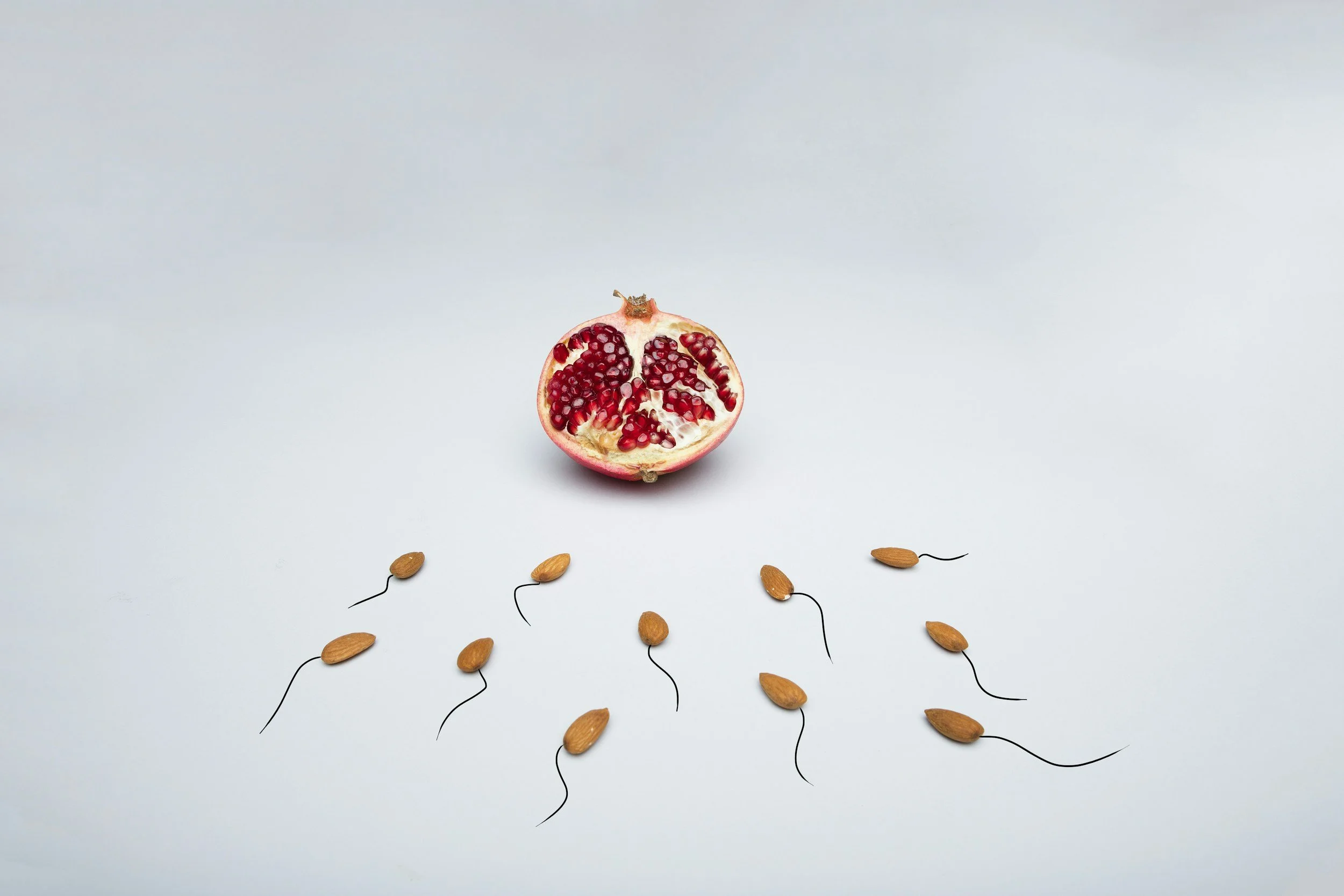
Somewhere along the way, 35 became a number women fear. A deadline. A cliff edge after which pregnancy is treated as unlikely, risky, or somehow irresponsible. Doctors stamp the phrase "advanced maternal age" on your chart the moment you hit that birthday, and suddenly a completely normal desire to have a child gets treated like a medical emergency.
Here is the truth: the data on fertility after 35 is far more nuanced and far more hopeful than the panic around that number suggests. Yes, fertility does change with age. Yes, there are real biological considerations worth understanding. But millions of women conceive naturally and have healthy pregnancies in their late 30s and early 40s every single year. What you deserve is accurate information not fear.
This post breaks down exactly what the research says, what actually changes after 35, what the real risks are (and are not), and what you can do to support your fertility right now
Where the "Fertility Cliff at 35" Myth Comes From
The statistic you have probably heard that one in three women over 35 will not conceive within a year of trying comes from a 2004 study published in the journal Human Reproduction. Here is the part that rarely gets mentioned: that study was based on French birth records from the 1700s. Not modern women. Not women with access to nutrition, reproductive medicine, or contemporary healthcare. Women from three centuries ago.
More recent research tells a different story. A 2004 study published in Obstetrics and Gynecology using actual modern data found that 82 percent of women aged 35 to 39 conceived within one year of trying. That is not dramatically different from the 86 percent of women aged 27 to 34 who conceived in the same timeframe. The gap exists, but it is much smaller than popular culture suggests.
Understanding this matters, because anxiety itself the cortisol, the stress, the hypervigilance can negatively impact the hormonal environment needed for conception. Women deserve accurate data, not numbers designed to frighten them into acting before they are ready.
What Actually Changes After 35
Fertility does change with age, and it helps to understand what specifically changes rather than treating age itself as the enemy.
Ovarian Reserve
Women are born with all the eggs they will ever have approximately one to two million at birth, declining to around 300,000 to 500,000 by puberty, and continuing to decline throughout the reproductive years. By the mid-30s, the total number of remaining eggs has decreased, and the rate of decline accelerates somewhat after 35. This reduction in ovarian reserve is measured clinically through an anti-Müllerian hormone (AMH) blood test and antral follicle count (AFC) on ultrasound.
Lower ovarian reserve does not mean infertility. It means fewer eggs remain, which can reduce the number of eggs available in any given cycle. Many women with lower-than-average AMH for their age conceive naturally without difficulty.
Egg Quality
Beyond quantity, egg quality the chromosomal integrity of eggs also changes with age. As eggs age, the risk of chromosomal errors during the final stage of cell division before ovulation increases. These chromosomal errors are the primary reason miscarriage rates rise with age and the reason the risk of chromosomal conditions like Down syndrome increases. At age 35, the risk of chromosomal abnormality in a pregnancy is approximately 1 in 200. By age 40 it rises to approximately 1 in 65. These are statistical risks not certainties and the majority of pregnancies in women over 35 are chromosomally normal.
Cycle Changes
Menstrual cycles may begin to shorten slightly in the mid-30s as the follicular phase (the first half of the cycle) becomes shorter. Ovulation may occur earlier in the cycle. Progesterone levels in the second half of the cycle can begin to decline, potentially shortening the luteal phase and reducing the implantation window. None of these changes are dramatic in the mid-to-late 30s, but they are worth tracking if conception is taking longer than expected.
Increased Rate of Twins
One lesser-known fertility fact: women in their mid-to-late 30s have a higher natural rate of fraternal (non-identical) twins than younger women. This happens because FSH the hormone that stimulates egg development rises with age, and higher FSH levels can stimulate more than one egg to mature in a single cycle.
The Real Pregnancy Risks After 35 Accurately Presented
"Advanced maternal age" carries real risk considerations. These deserve honest discussion not alarmism, but also not dismissal.
Gestational diabetes — the risk increases with age and is higher in women over 35, particularly those with additional risk factors like family history, elevated BMI, or PCOS. It is screened for routinely during pregnancy and is manageable with dietary changes, monitoring, and in some cases medication.
Gestational hypertension and preeclampsia — the risk of developing high blood pressure during pregnancy is somewhat higher in women over 35. Regular prenatal monitoring is designed specifically to detect and manage this early.
Chromosomal conditions — as discussed above, the risk of chromosomal abnormalities like Down syndrome (trisomy 21) increases with maternal age. Prenatal screening options — including cell-free DNA (cfDNA) screening, which is a simple blood test are highly accurate at detecting chromosomal conditions early in pregnancy.
Miscarriage — the miscarriage rate does rise with age, from approximately 10 percent in women in their 20s to roughly 20 to 25 percent in women aged 35 to 39, and higher in the early 40s. The majority of miscarriages are caused by chromosomal abnormalities in the embryo not by anything the woman did or did not do.
Cesarean delivery — women over 35 have a higher rate of cesarean delivery, partly due to higher rates of complications like placenta previa and preterm labor, and partly due to obstetric practice patterns that may be more intervention-oriented with older mothers.
What this risk picture does not mean: that pregnancy after 35 is dangerous, inadvisable, or likely to end badly. The vast majority of women over 35 have healthy pregnancies and healthy babies. These risks are statistical increases most of which are screened for and managed through standard prenatal care.
How Long Should You Try Before Seeking Help?
Standard guidance recommends seeing a fertility specialist if:
You are under 35 and have been trying to conceive for 12 months without success
You are 35 to 39 and have been trying for 6 months without success
You are 40 or older and should consider evaluation before actively trying or after 3 months of trying
These timelines are not rigid rules they are starting points. If you have a known condition that affects fertility (endometriosis, PCOS, fibroids, irregular cycles, prior pelvic infections), do not wait. Seek evaluation earlier rather than later, because some conditions benefit significantly from early intervention.
"Trying to conceive" means regular unprotected intercourse ideally timed around ovulation, roughly days 10 to 16 of a typical 28-day cycle. Cycle tracking using basal body temperature, cervical mucus changes, or LH ovulation predictor kits gives you the clearest picture of your personal fertile window.
The Fertility Workup: What to Expect
When you do see a reproductive endocrinologist or fertility specialist, a standard fertility evaluation for women over 35 typically includes:
For you:
Day 3 FSH and estradiol — assesses ovarian reserve and function
Anti-Müllerian hormone (AMH) — reflects the remaining egg supply
Antral follicle count (AFC) — transvaginal ultrasound count of small follicles in both ovaries
Thyroid stimulating hormone (TSH) — thyroid dysfunction directly impacts fertility
Pelvic ultrasound — evaluates the uterus and ovaries for fibroids, polyps, or cysts
Hysterosalpingogram (HSG) — an X-ray procedure that checks whether the fallopian tubes are open
For your partner:
Semen analysis — evaluates sperm count, motility, and morphology
Male factor infertility accounts for approximately 30 to 40 percent of all fertility challenges. Testing both partners from the start avoids unnecessary delays.
Treatment Options When Conception Is Taking Longer
If natural conception is not occurring within the expected timeframe, a range of evidence-based options are available:
Ovulation induction — medications such as clomiphene citrate (Clomid) or letrozole (Femara) stimulate the ovaries to produce one or more eggs per cycle. Often the first-line treatment for women with irregular ovulation or PCOS.
Intrauterine insemination (IUI) — washed, concentrated sperm is placed directly into the uterus around the time of ovulation, increasing the number of sperm that reach the egg. Often combined with ovulation induction medications.
In vitro fertilization (IVF) — eggs are retrieved from the ovaries, fertilized in a laboratory, and the resulting embryos are transferred into the uterus. IVF is the most effective fertility treatment available. For women aged 35 to 37, the live birth rate per IVF cycle using their own eggs is approximately 30 to 40 percent. At ages 38 to 40 it is approximately 20 to 25 percent, and over 40 it declines further which is why IVF is most effective when begun sooner rather than later.
Preimplantation genetic testing (PGT) — embryos created through IVF can be tested for chromosomal abnormalities before transfer, selecting only chromosomally normal embryos for transfer. PGT can significantly improve IVF success rates and reduce miscarriage risk for women over 35.
Donor eggs — for women whose ovarian reserve is significantly diminished or whose own eggs are not producing viable embryos, using eggs donated by a younger woman through IVF offers very high success rates typically 40 to 50 percent per transfer because the age of the egg, not the uterus, is the primary determinant of IVF success.
Egg freezing (oocyte cryopreservation) — for women not yet ready to conceive but concerned about future fertility, freezing eggs at a younger age preserves egg quality at the time of freezing. Eggs frozen at 35 have a meaningfully better chance of leading to a successful pregnancy than eggs retrieved at 40.
What You Can Do Right Now to Support Fertility
These evidence-based lifestyle factors support reproductive health at any age:
Maintain a healthy weight — both underweight and overweight BMI can disrupt ovulation. Even modest weight normalization can restore ovulatory function in some women
Quit smoking — smoking accelerates ovarian aging and egg loss more than almost any other modifiable factor
Limit alcohol — even moderate alcohol consumption is associated with reduced fertility; limiting to fewer than five drinks per week is the current evidence-based recommendation for women trying to conceive
Manage stress — chronic cortisol elevation disrupts the HPO axis, impairs ovulation, and reduces the quality of the uterine environment; evidence supports mind-body practices including yoga, acupuncture, and mindfulness for fertility support
Take prenatal vitamins with folate — ideally starting three months before trying to conceive; folate reduces the risk of neural tube defects significantly
Optimize thyroid and vitamin D levels — both have direct impacts on fertility and early pregnancy success; ask your provider to check both
Limit caffeine — current evidence suggests keeping caffeine below 200 mg per day (roughly one to two cups of coffee) when trying to conceive
The Bottom Line
Thirty-five is not a fertility cliff. It is a number one that carries some real biological considerations worth understanding and planning around, but not a deadline that should drive panic or rushed decisions.
Women over 35 conceive naturally, carry healthy pregnancies, and deliver healthy babies every single day. The most powerful thing you can do is arm yourself with accurate information, track your cycle, pursue evaluation on an appropriate timeline, and work with a provider who takes your reproductive goals seriously at any age.
“This article is based on current medical guidance and research from the following trusted sources:”
Resources & Sources
American College of Obstetricians and Gynecologists (ACOG) — Having a Baby After Age 35: acog.org
American Society for Reproductive Medicine (ASRM) — Age and Fertility: reproductivefacts.org
Mayo Clinic — Pregnancy After 35: Healthy Moms, Healthy Babies: mayoclinic.org
Cleveland Clinic — Female Infertility: Causes, Diagnosis and Treatment: clevelandclinic.org
Healthline — Fertility After 35: What You Should Know: healthline.com
National Institutes of Health / PubMed — Age and Female Fertility: pubmed.ncbi.nlm.nih.gov
Human Reproduction Journal — Age and Natural Fertility in Women: academic.oup.com
Centers for Disease Control (CDC) — ART Success Rates: cdc.gov
Society for Assisted Reproductive Technology (SART) — IVF Success Rates by Age: sart.org
Office on Women's Health — Fertility and Infertility: womenshealth.gov
Were you told your fertility window was closing and felt the pressure of that number? Share your experience in the comments or tag someone who needs to read the real data, not the fear.
Author
Becky Freeman is the founder of BVTalks® and Bee Vee Clean. She focuses on women’s intimate health, vaginal microbiome education, and creating practical, easy-to-understand content for everyday care.
Disclaimer: This post is for educational purposes only and is not a substitute for professional medical advice. Always consult your healthcare provider for diagnosis and treatment.
