

The Estrogen Dominance Symptom Checklist Women Ignore
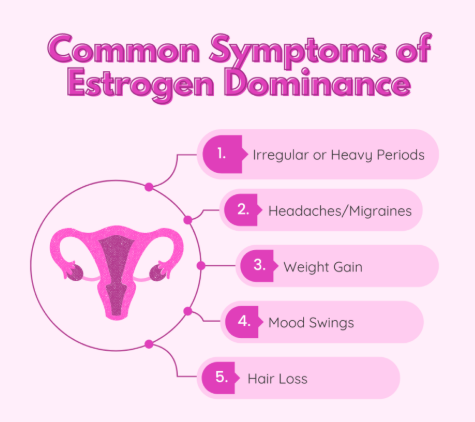
You are exhausted but you cannot sleep. Your periods are heavier than they used to be. Your moods swing in ways that feel out of your control. You are gaining weight around your hips and belly even though nothing about your lifestyle has changed. You feel puffy, tender, anxious, and just not quite like yourself and every time you bring it up, someone tells you it is just stress.
What if it is not just stress? What if your hormones are actually out of balance in a very specific, very common way that most women are never taught to recognize?
That condition is called estrogen dominance and it is one of the most talked-about and least understood hormonal patterns in women's health today. It affects women across all age groups, from their early twenties through perimenopause and beyond. It shows up in dozens of symptoms that most women have been told to push through. And yet, with the right support, it is one of the most manageable hormonal imbalances there is.
This post walks you through what estrogen dominance actually means, the most common symptoms women ignore, what causes it, and what you can do about it.
What Is Estrogen Dominance?
Estrogen dominance does not necessarily mean your estrogen is too high in an absolute sense. It means your estrogen is high relative to progesterone the other key reproductive hormone that should balance it out.
Estrogen and progesterone work as a team:
Estrogen builds and stimulates. It thickens the uterine lining, promotes cell growth, supports mood, and drives many of the processes of the first half of your cycle.
Progesterone calms and balances. It is produced after ovulation, stabilizes the uterine lining, supports sleep and mood, and counteracts estrogen's stimulating effects.
When progesterone is low or when estrogen is elevated that balance tips. The result is a pattern of symptoms driven by relatively unopposed estrogen.
Estrogen dominance can occur because:
Estrogen is genuinely elevated.
Progesterone is low even if estrogen is normal.
Both hormones are within normal ranges but the ratio is off.
The body is not clearing and detoxifying estrogen efficiently through the liver and gut.
The Symptom Checklist Women Ignore
Many of these symptoms are so common in women that they get normalized. Read through this list and notice how many apply to you:
Menstrual symptoms:
Heavy, painful, or prolonged periods.
Passing large clots during your period.
Spotting before your period starts.
Breast tenderness, especially in the week before your period.
Severe PMS mood swings, irritability, crying spells, or anxiety that are clearly worse in the second half of your cycle.
Physical symptoms:
Weight gain, especially around the hips, thighs, and belly.
Bloating that is worse around your period.
Puffy or swollen feeling even when you have not eaten anything unusual.
Fatigue that does not improve with sleep.
Headaches or migraines, particularly around ovulation or before your period.
Fibrocystic breast changes lumpy or tender breast tissue.
Mood and mental health symptoms:
Anxiety or a general sense of dread that worsens before your period.
Irritability or anger that feels disproportionate.
Brain fog, difficulty concentrating, or feeling mentally slow.
Depression that follows a cyclical pattern tied to your cycle.
Sleep symptoms:
Insomnia or difficulty staying asleep, especially in the second half of your cycle.
Waking between 2 and 4 a.m. regularly.
Other symptoms:
Low libido.
Decreased thyroid function or symptoms of hypothyroidism.
Hair thinning or hair loss.
Acne, particularly hormonal breakouts along the jaw and chin.
If several of these sound very familiar, estrogen dominance may be worth discussing with a healthcare provider who is knowledgeable about hormonal health.
Who Is Most at Risk?
Estrogen dominance can affect women at any age, but it is particularly common in:
Women in their 30s and early 40s
As progesterone production begins to gradually decline in the years leading up to perimenopause, estrogen can become relatively dominant even before classic perimenopausal symptoms begin. This is why many women in their mid-thirties notice heavier periods, worsening PMS, and new mood changes.
Women with PCOS
Polycystic ovary syndrome involves irregular ovulation or anovulation cycles where no egg is released. Without ovulation, the corpus luteum does not form and progesterone is not produced, leaving estrogen relatively unopposed.
Women under chronic stress
Chronic stress elevates cortisol, the main stress hormone. When cortisol is chronically elevated, it competes with and suppresses progesterone production through a pathway sometimes called "progesterone steal." This is one of the most underappreciated connections between stress and hormonal health.
Women with poor gut health or liver function
Estrogen that has been used by the body is processed through the liver and eliminated through the gut. If the liver is congested or the gut microbiome is imbalanced, estrogen can be reabsorbed into the bloodstream instead of being excreted. This is called estrogen recirculation and it can significantly contribute to estrogen dominance symptoms.
Women exposed to xenoestrogens
Xenoestrogens are estrogen-mimicking compounds found in plastics, pesticides, certain cosmetics and personal care products, and some food packaging. When absorbed into the body, they bind to estrogen receptors and mimic the effects of natural estrogen adding to the overall estrogenic load.
What Causes Estrogen Dominance?
The causes are often layered:
Chronic stress suppressing progesterone production.
Poor sleep disrupting hormonal regulation.
Gut dysbiosis allowing estrogen recirculation.
Liver burden reducing estrogen detoxification.
Anovulatory cycles producing insufficient progesterone.
Environmental xenoestrogen exposure from plastics and chemicals.
Body fat fat tissue produces estrogen; higher body fat can contribute to higher estrogen levels.
Perimenopause declining progesterone in the years before menopause.
In most cases, estrogen dominance is not caused by one single factor. It is the result of multiple influences stacking up over time
How Is Estrogen Dominance Diagnosed?
There is no single universally agreed-upon test. Diagnosis is usually based on:
A thorough review of symptoms and cycle patterns.
Blood testing for estradiol, progesterone, and other relevant hormones, ideally timed to the appropriate phase of your cycle.
Sometimes urine testing that measures estrogen metabolites and how estrogen is being detoxified.
Thyroid panels, since thyroid dysfunction can mimic and contribute to estrogen dominance symptoms.
Working with a provider who is knowledgeable about hormonal health whether a gynecologist, functional medicine practitioner, naturopathic doctor, or endocrinologist gives you the best chance of getting a clear and personalized picture
What You Can Do About Estrogen Dominance
Support healthy estrogen detoxification through the gut
A healthy gut microbiome is essential for estrogen clearance. Steps to support this include:
Eating plenty of fiber vegetables, legumes, fruits, and whole grains help bind and excrete estrogen in the stool.
Supporting the gut microbiome with fermented foods and targeted probiotics.
Avoiding unnecessary antibiotics that disrupt gut bacteria.
Staying hydrated and maintaining regular bowel movements.
Support liver function
The liver processes estrogen for excretion. Supporting liver health includes:
Reducing alcohol intake.
Eating cruciferous vegetables like broccoli, cauliflower, Brussels sprouts, and kale these contain compounds like DIM (diindolylmethane) and I3C (indole-3-carbinol) that support healthy estrogen metabolism.
Reducing processed foods and sugar.
Manage chronic stress
Because chronic stress suppresses progesterone, stress management is directly connected to hormonal balance. Prioritizing sleep, gentle movement, nervous system support, and addressing major sources of chronic stress all have real hormonal effects.
Reduce xenoestrogen exposure where possible
Swap plastic food containers for glass or stainless steel.
Avoid microwaving food in plastic.
Choose fragrance-free personal care products where possible.
Consider organic produce for the highest-pesticide foods.
Discuss medical options with your provider
Depending on your specific hormonal picture, a provider may discuss:
Bioidentical progesterone cream or oral progesterone to support balance.
Hormonal birth control adjustments if your current method is worsening symptoms.
Thyroid treatment if thyroid function is contributing.
DIM supplements, which support estrogen metabolism
When to See a Provider
Bring up estrogen dominance with a healthcare provider if:
Your periods have become significantly heavier, more painful, or longer.
PMS symptoms are affecting your quality of life.
You have unexplained weight gain, fatigue, or mood changes that follow a cyclical pattern.
You have been diagnosed with fibroids, endometriosis, or PCOS all of which are associated with excess estrogenic activity.
You are approaching your late thirties or forties and noticing significant cycle or symptom changes.
You have tried lifestyle changes without meaningful improvement.
You do not have to wait until symptoms are severe. Hormonal imbalances are much easier to address early than after years of impact.
“This article is based on current medical guidance and research from the following trusted sources:”
Resources & Sources
Cleveland Clinic Estrogen: What It Does and Estrogen Imbalance -
clevelandclinic.org
Healthline What Is Estrogen Dominance? -
healthline.com
Medical News Today Estrogen dominance: Symptoms, causes, and treatment -
medicalnewstoday.com
American College of Obstetricians and Gynecologists (ACOG) Premenstrual Syndrome and PMDD -
acog.org
National Institutes of Health (NIH) / PubMed Estrogen metabolism, gut microbiome, and hormonal health -
pubmed.ncbi.nlm.nih.gov
Do you recognize yourself in this symptom checklist? How many boxes did you check? Share in the comments you might be surprised how many other women are nodding along.
Author
Becky Freeman is the founder of BVTalks® and Bee Vee Clean. She focuses on women’s intimate health, vaginal microbiome education, and creating practical, easy-to-understand content for everyday care.
Disclaimer: This post is for educational purposes only and is not a substitute for professional medical advice. Always consult your healthcare provider for diagnosis and treatment.
