

Does Swimming Make BV Worse? The Truth About Pools and Vaginal Health

Summer hits, you head to the pool, and within a few days the familiar signs are back. The unusual discharge. The odor. The frustration of knowing exactly what is coming. You've noticed the pattern before but never quite connected the dots. Or maybe you have connected them and you've been quietly avoiding pools, lakes, and hot tubs for years because every time you swim, your vaginal health pays the price.
You are not imagining it. You are not unusually sensitive. And you are absolutely not alone.
Swimming in pools, lakes, hot tubs, and even the ocean can genuinely disrupt vaginal health for many women. The reasons are specific, well-grounded in the science of vaginal pH and microbiology, and entirely worth understanding. Because the answer is not to never swim again. The answer is to swim smarter, with a clear understanding of what is happening in your body and what you can do to protect it
The Vaginal Environment and Why Water Is a Disruptor
To understand why swimming affects vaginal health, you need to start with what a healthy vaginal environment looks like.
A healthy vagina maintains a naturally acidic pH between 3.8 and 4.5 similar to a glass of wine or black coffee. This acidity is produced primarily by Lactobacillus bacteria, which convert glycogen in vaginal cells into lactic acid. This acidic environment is your first line of defense: it inhibits the growth of BV-associated bacteria, yeast, and other pathogens that prefer a more neutral or alkaline environment.
When anything raises your vaginal pH above 4.5, that protective acidic shield weakens. Opportunistic bacteria including Gardnerella vaginalis, Atopobium vaginae, and the anaerobes associated with BV seize the window and begin to overgrow.
Water of virtually every kind is more pH-neutral than your vaginal environment. And depending on the body of water, it can also carry bacteria, chemicals, and organisms that directly challenge your vaginal microbiome. Here is what that looks like across different swimming environments.
Swimming Pools: Chlorine Is Not Your Friend Down There
Chlorinated swimming pools are the most common swimming environment for most women — and one of the most misunderstood in the context of vaginal health.
The pH of pool water
Pool water is typically maintained at a pH of 7.2 to 7.8 significantly more alkaline than your vaginal environment. When pool water enters the vaginal area during swimming, it temporarily raises local pH. For most women, this is a brief disruption that the body corrects quickly. For women who are already prone to BV or whose Lactobacillus populations are borderline, even a temporary pH elevation can be enough to tip the balance toward dysbiosis.
Chlorine's effect on vaginal tissue and bacteria
Chlorine is a disinfectant it kills bacteria. The problem is that it is not selective. Chlorine exposure to the external vulva and vaginal opening can disrupt the Lactobacillus populations living there. While chlorine does not penetrate deep into the vagina in significant concentrations during normal swimming, the external disruption is real and meaningful for women who are already vulnerable to imbalance.
Chlorine and irritation
Chlorine is a chemical irritant. For women with sensitive vulvar skin which includes many women prone to recurrent BV or yeast infections chlorine exposure causes dryness, redness, and irritation of the vulvar skin and vaginal opening. This irritation disrupts the protective skin barrier, making it easier for bacteria and yeast to establish a foothold.
What lives in pool water
Even well-maintained pools are not sterile. Studies by the CDC have found that pool water regularly contains gut bacteria, skin bacteria, and in some cases pathogens because swimmers introduce these organisms through sweat, urine, and fecal contamination. Chlorine reduces but does not eliminate all of these organisms. For a vaginal microbiome already under stress, exposure to additional bacterial diversity is a risk factor for disruption.
Hot Tubs: The Highest Risk Swimming Environment
If pools are a concern, hot tubs are a significantly elevated one and the reasons are straightforward.
Heat amplifies every risk
Hot tub water is warm typically 100–104°F (37–40°C). Warmth is one of the primary conditions that promotes bacterial overgrowth. The combination of elevated temperature, water exposure, and chemical disruption makes hot tubs particularly problematic for vaginal health.
pH fluctuates more in hot tubs
Hot tub water pH fluctuates more than pool water because the smaller volume of water and higher bather load create more rapid pH swings. pH can rise quickly to 8.0 or higher in a heavily used hot tub well above the range that is comfortable for a healthy vaginal microbiome.
Chlorine concentration varies dramatically
Hot tub chlorine levels fluctuate significantly with use, temperature, and time since last treatment. Poorly maintained hot tubs can harbor significant bacterial populations including Pseudomonas aeruginosa, which causes the characteristic "hot tub rash" (folliculitis), and in rare cases Legionella. Yeast infections after hot tub exposure are a well-documented clinical observation.
The practical recommendation
For women prone to recurrent BV or yeast infections, hot tub use warrants particular caution especially public or hotel hot tubs where maintenance may be inconsistent. Limiting soak time, rinsing immediately afterward, and changing out of a wet swimsuit promptly are the most protective steps you can take if you choose to use one.
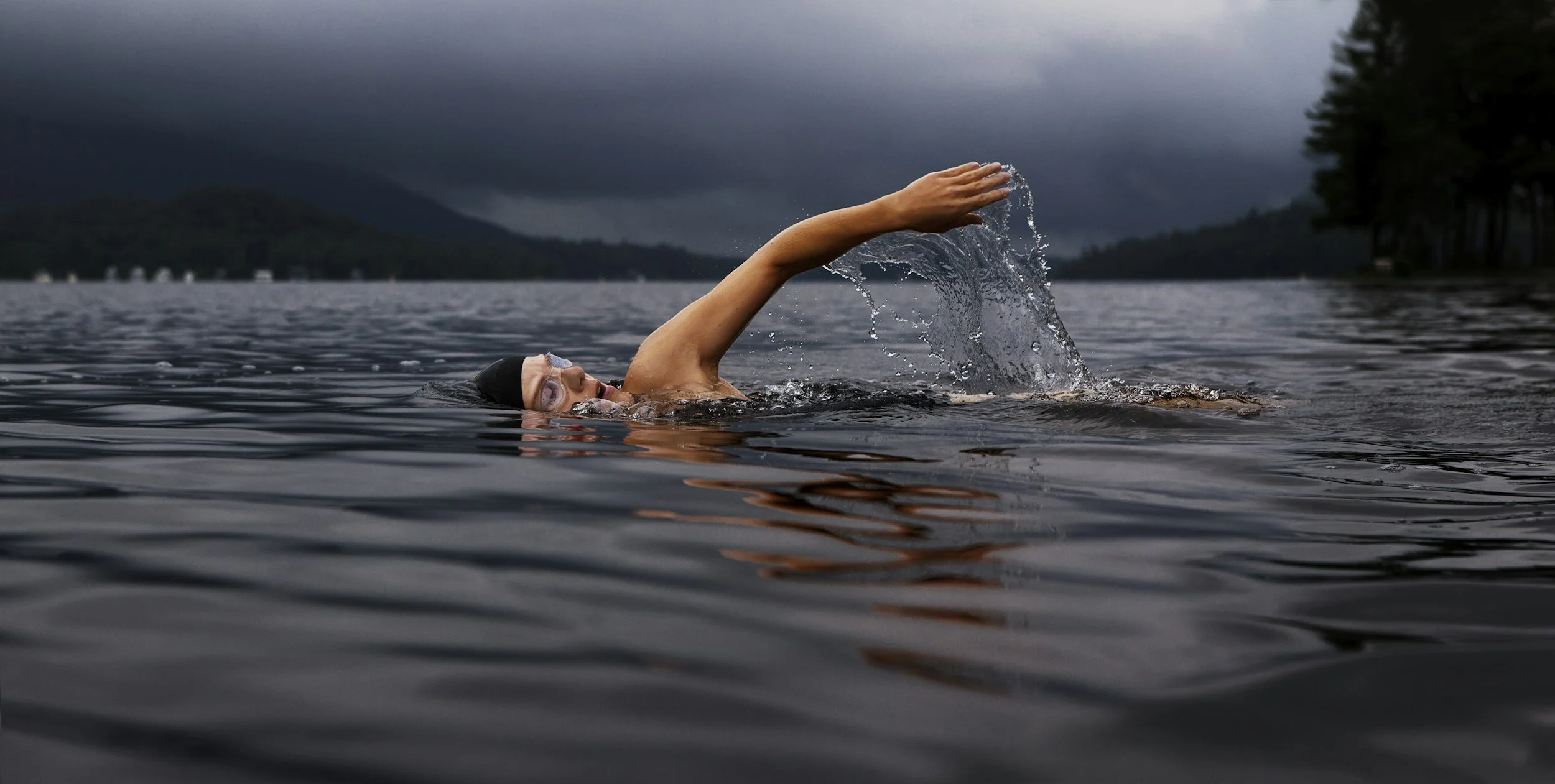
Lakes, Rivers, and Natural Bodies of Water
Natural bodies of water present a different set of challenges than chlorinated pools.
Bacterial diversity
Lakes, rivers, and ponds contain diverse natural bacterial ecosystems including organisms that are entirely foreign to the vaginal microbiome. While most of these bacteria do not cause vaginal infections specifically, their introduction into the vaginal environment adds bacterial diversity that can displace Lactobacillus dominance particularly in a microbiome that is already borderline.
E. coli and other pathogens
Natural water bodies particularly those near agricultural land, popular swimming spots, or areas with inadequate wastewater management can contain elevated levels of E. coli and other fecal coliforms. E. coli is the primary bacteria behind aerobic vaginitis (AV) and a leading cause of UTIs. Exposure to E. coli-contaminated water during swimming is a real risk factor for both conditions.
Variable pH
Natural water bodies have variable pH depending on location, rainfall, and environmental factors. Many natural freshwater bodies have a pH of 6.0–8.0 above the optimal vaginal range.
Ocean water
Saltwater has a pH of approximately 7.8–8.3 and contains its own diverse microbial ecosystem. For many women, ocean swimming causes less vaginal disruption than freshwater or pools some women actually report feeling better after ocean swimming, possibly due to the slightly antimicrobial nature of salt. However, the elevated pH is still a disruption factor, and ocean water in populated swimming areas carries its own bacterial load from human activity.
Why Wet Swimsuits Are a Separate Problem
The disruption does not end when you get out of the water. Sitting in a wet swimsuit especially a synthetic one after swimming is one of the most significant post-swimming risk factors for vaginal infections.
A wet synthetic swimsuit creates:
A warm, moist environment directly against your vulva
Reduced airflow and ventilation
Prolonged exposure to whatever was in the water (pool chemicals, natural bacteria)
Fabric friction against irritated skin
This is why women often notice symptoms appearing not during swimming itself but in the days following. The swimming disrupts the vaginal environment; the prolonged wet swimsuit extends and deepens that disruption.
Dermatologists and gynecologists are consistent on this point: change out of your wet swimsuit as soon as possible after swimming. Even if you cannot shower immediately, changing into dry clothes dramatically reduces the post-swimming risk window.
Does Swimming Actually Cause BV Or Just Trigger It?
This is an important distinction. Swimming is almost certainly a trigger for BV rather than a direct cause in the way a bacterial infection is caused.
BV requires an underlying vulnerability a vaginal microbiome that is already borderline, with Lactobacillus populations that are less dominant or less resilient than they need to be. For women with a robustly dominant Lactobacillus microbiome, a swim in a well-maintained pool may cause brief, temporary pH disruption that their microbiome corrects within hours. They may never notice anything.
For women whose microbiome is already fragile whether due to hormonal fluctuations, recent antibiotic use, sexual activity, or chronic recurrent BV that same swim may be the tipping point that pushes their vaginal environment from borderline to fully dysbiotic.
This is why some women can swim every day without issue while others notice BV symptoms within 48 hours of pool time. It is not about the pool being uniquely harmful to you personally. It is about where your vaginal microbiome is at the time of exposure.
Can You Still Swim? Absolutely Here Is How to Protect Yourself
The goal is never to tell women to stop living their lives. Swimming is wonderful for fitness, mental health, social connection, and joy. Here is how to swim while actively protecting your vaginal health:
Before swimming:
Support your vaginal microbiome proactively if you know a swimming-heavy weekend is coming, make sure your probiotic routine is consistent in the days before; Lactobacillus rhamnosus GR-1 and L. reuteri RC-14 are the most clinically studied strains for vaginal resilience
Avoid swimming immediately after sex your vaginal pH is already temporarily elevated after sex; adding pool or lake exposure during that window compounds the disruption
Avoid swimming during or immediately after your period vaginal pH naturally rises during menstruation; swimming during this window adds additional pH disruption on top of an already vulnerable state
During swimming:
Limit time in hot tubs especially public ones; keep soak time short and consider skipping altogether if you are prone to recurrent infections
Avoid submerging in obviously poorly maintained water cloudy pool water, visibly dirty lakes, or public hot tubs with a strong chemical smell are red flags
After swimming:
Change out of your wet swimsuit immediately this single step makes the largest post-swimming difference
Rinse your vulva with clean, lukewarm water after swimming to remove chlorine, bacteria, and chemical residues; do not use soap inside the vaginal opening — clean water externally is sufficient
Pat dry gently rather than rubbing; the vulvar skin is delicate and already potentially irritated from water exposure
Change into dry 100% cotton underwear as we covered in our post on underwear and vaginal health, cotton allows airflow and moisture wicking that supports recovery of the vaginal environment after swimming
Consider a pH-balancing intimate wash on your external vulva after swimming a fragrance-free, pH-balanced cleanser removes chemical and bacterial residues from the vulvar skin without disrupting your internal vaginal environment
If you swim frequently:
Use boric acid suppositories proactively some women prone to post-swimming BV use a single boric acid suppository the evening after a swim day as a preventive pH-correction tool; discuss this approach with your provider
Track your pattern if BV consistently follows swimming, note it and bring it to your gynecologist; this pattern information is clinically useful and helps your provider tailor a preventive strategy for you
What About Tampons and Menstrual Cups While Swimming?
A common question: does wearing a tampon while swimming protect the vaginal environment from water disruption?
Tampons do create a partial physical barrier at the vaginal opening that reduces direct water entry. However, tampons also absorb water including pool water, lake water, and all the bacteria and chemicals they contain and hold that water against vaginal tissue for the duration of wear. A waterlogged tampon sitting against vaginal tissue after swimming is not a protective tool.
Menstrual discs and soft menstrual cups sit higher in the vaginal canal and do not absorb water they may offer slightly better protection from direct water entry. However, they are not designed or marketed as vaginal protection from swimming water, and the evidence for their protective effect in this context is limited.
The most protective approach remains changing out of wet swimwear promptly and rinsing externally after swimming not relying on internal products to block water entry.
The Takeaway: Swim, But Swim Smart
Swimming does not have to mean a monthly BV episode. Understanding exactly what happens to your vaginal environment in water pH elevation, bacterial exposure, chemical irritation, prolonged moisture gives you the tools to swim with intention and protect your microbiome in the process.
The women who swim without consequence are not doing anything magical. They often simply have a more resilient vaginal microbiome in that moment, supported by consistent probiotic use, good daily hygiene habits, and the small practical steps changing promptly, rinsing, drying, cotton underwear that keep the balance tipped in Lactobacillus's favor.
Those same tools are available to you. Implement them consistently, track your patterns, and work with your provider to build a preventive strategy that fits your life and your swimming schedule.
Frequently Asked Questions
Can swimming in the ocean cause BV?
Ocean swimming can contribute to vaginal pH disruption due to the alkaline pH of seawater and the bacterial diversity in ocean water. However, many women tolerate ocean swimming better than pool or hot tub exposure. Rinsing and changing promptly after ocean swimming is the same protective approach as with any water.
How long after swimming does BV typically develop?
If swimming triggers a BV episode, symptoms typically begin to appear within 24 to 72 hours of the exposure reflecting the time it takes for BV-associated bacteria to proliferate to symptomatic levels after an initial pH disruption.
Should I use a vaginal wash inside my vagina after swimming?
No. The inside of the vagina is self-cleaning and should never have any product inserted into it, including intimate washes. Clean, lukewarm water rinsed externally over the vulva is all that is needed after swimming. Never douche.
Can swimming with BV make it worse?
Yes. If you already have an active BV infection, swimming in pools, hot tubs, or natural water bodies can worsen symptoms by further disrupting your vaginal pH and introducing additional bacterial challenge. Treating BV before swimming is the most protective approach.
Does swimming affect yeast infections the same way it affects BV?
Yes and no. Yeast infections (candidiasis) are driven by different organisms (Candida species) that thrive in warm, moist environments. The warm, moist post-swimming environment particularly in hot tubs and wet synthetic swimsuits is a well-known yeast infection trigger. The prevention strategies are largely the same: change promptly, rinse, dry thoroughly, and wear cotton.
“This article is based on current medical guidance and research from the following trusted sources:”
Resources & Sources
Centers for Disease Control and Prevention (CDC) Healthy Swimming: cdc.gov/healthywater/swimming
Centers for Disease Control and Prevention (CDC) Bacterial Vaginosis: cdc.gov/std/bv
American College of Obstetricians and Gynecologists (ACOG) Vulvovaginal Health: acog.org
Mayo Clinic Bacterial Vaginosis: mayoclinic.org
National Institutes of Health (NIH) Vaginal Microbiome Research: pubmed.ncbi.nlm.nih.gov
Ravel, J., et al. (2011). Vaginal microbiome of reproductive-age women. PNAS.
World Health Organization (WHO) Water Quality and Health: who.int
Do you notice BV or vaginal irritation after swimming? Have you figured out which type of water is the biggest trigger for you? Share your experience in the comments real-life patterns from real women help this community more than any textbook ever could.
Author
Becky Freeman is the founder of BVTalks® and Bee Vee Clean. She focuses on women’s intimate health, vaginal microbiome education, and creating practical, easy-to-understand content for everyday care.
Disclaimer: This post is for educational purposes only and is not a substitute for professional medical advice. Always consult your healthcare provider for diagnosis and treatment.
