

Adenomyosis: The “Hidden” Cause of Heavy, Crushing Periods
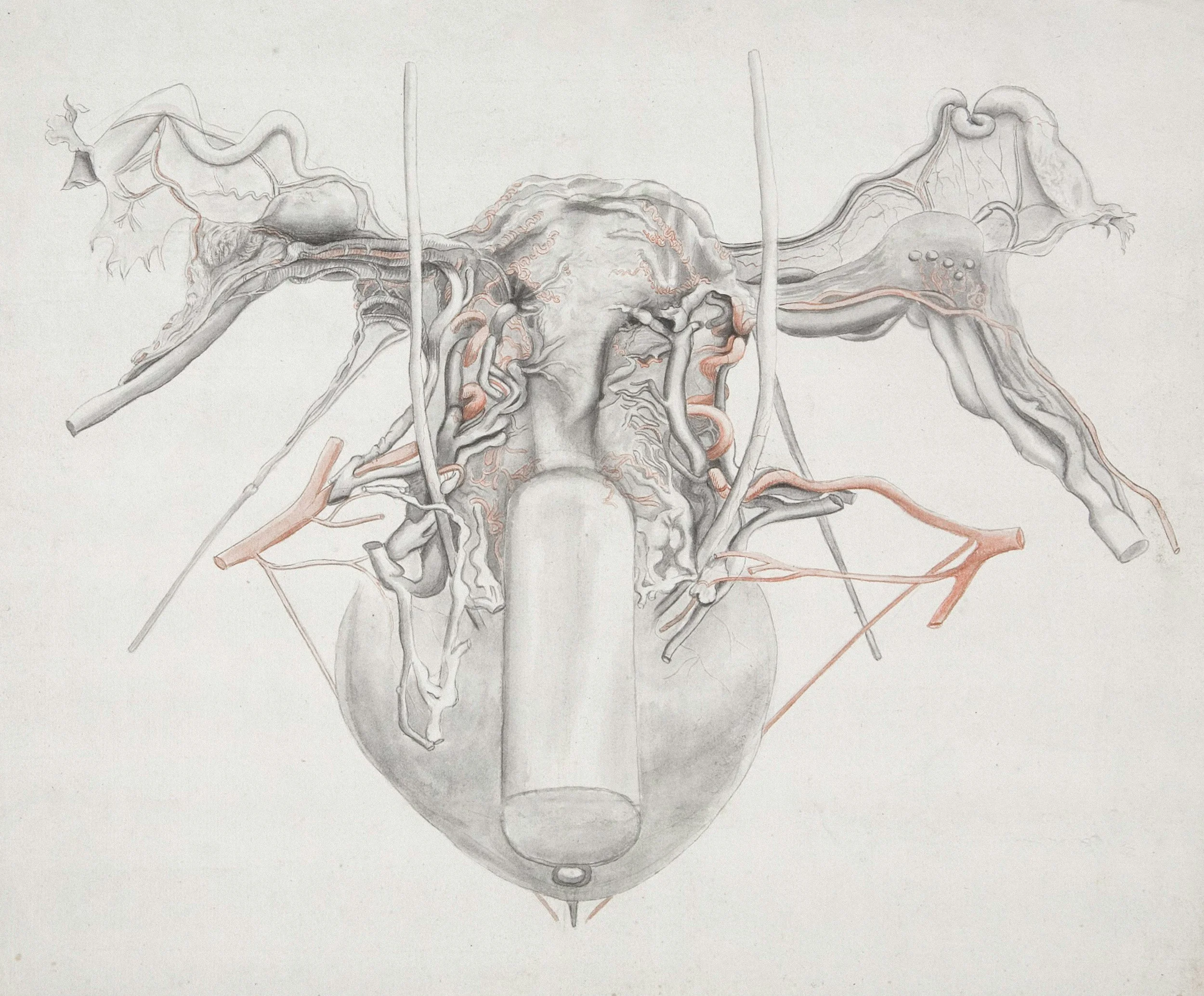
You bleed so heavily you plan your life around bathrooms. You pass clots, double up pads, and still stain your clothes. Your cramps feel like someone’s gripping your uterus from the inside and half the month you’re just…tired and sore.
You may have been told it’s:
“Just how your body does periods.”
“Probably fibroids.”
“Stress.”
What almost no one mentions is adenomyosis - a condition where the tissue that normally lines your uterus grows into the uterine muscle itself, making the uterus thicker, heavier, and more painful. It’s increasingly recognized as a major cause of heavy menstrual bleeding and severe dysmenorrhea, and can show up in both young women and those in their 40s.
This post explains:
What adenomyosis actually is (and how it’s different from endometriosis)
Why it causes heavy, crushing periods and chronic pelvic pain
How common it really is and why so many women never get told
How doctors diagnose it with ultrasound/MRI instead of “wait and see”
What treatment paths exist if you’re not ready for hysterectomy
What Adenomyosis Actually Is
Adenomyosis is a gynecologic condition where endometrial glands and stroma (the tissue that lines your uterus) grow into the myometrium (the uterine muscle wall).
Key points:
Think of your uterus as having a lining (endometrium) and a muscle wall (myometrium). In adenomyosis, the lining cells invade into the muscle, where they bleed and respond to hormones each cycle just like they would in the lining.
This invasion can be diffuse (spread out) or focal (localized “adenomyoma” areas).
Adenomyosis is distinct from endometriosis, which is when similar tissue grows outside the uterus (e.g., on ovaries, bowel, bladder)
The two conditions can co‑exist, which is one reason women’s pain stories get so complex.
When that inner lining burrows into the muscle, your uterus often becomes enlarged, boggy, and more tender, with more surface area bleeding and more cramping to expel it.
How Adenomyosis Causes Heavy, Crushing Periods
Adenomyosis is strongly linked to heavy menstrual bleeding (HMB) and dysmenorrhea
Mechanisms include:
More endometrial “real estate” bleeding each cycle.
Ectopic endometrial tissue within the muscle increases the total volume of tissue that bleeds, contributing to heavier flow
Abnormal uterine contractions.
Invasion into the myometrium and altered oxytocin receptors/prostaglandins lead to strong, disorganized contractions, causing intense cramps and squeezing pain
Increased vascularization.
The affected areas often have more blood vessels, further increasing bleeding volume
Clinically, that looks like:
Periods that are heavier (40–60% of adenomyosis patients), often with clots and prolonged bleeding
Cramps that are deep, crushing, and sometimes worse than “usual endometriosis cramps.”
Bleeding and pain that can lead to anemia, fatigue, dizziness, and mood changes from chronic blood loss
One cross‑sectional survey across 37 hospitals found that among 1636 women with adenomyosis, about 61% had dysmenorrhea and over 70% used painkillers, with more than one‑third needing them long‑term. That’s not mild discomfort that’s a public health problem
How Common Is Adenomyosis and Why Is It So Under‑Recognized?
Prevalence estimates are messy, mainly because adenomyosis used to be diagnosed only after hysterectomy
Current data suggest:
Overall prevalence in reproductive‑age women is likely around 20–35%, with huge ranges (5–70%) in older studies due to inconsistent criteria
In hysterectomy series, adenomyosis is found in 10–48% of specimens, with some cohorts showing 42–59% prevalence in women undergoing hysterectomy for bleeding and dysmenorrhea
In adolescents and young women (12–25) evaluated for heavy bleeding and dysmenorrhea, imaging‑based prevalence ranged from 25–45%, with dysmenorrhea present in 81–100% of those diagnosed
StatPearls notes that more recent data support prevalence around 20–35%, making adenomyosis a common benign uterine condition, not a rare curiosity
Despite this, many women never hear the word because:
It can be asymptomatic in up to one‑third of cases
Symptoms overlap with fibroids, endometriosis, and “heavy periods”, so it gets lumped under broad labels.thelancet+2
Imaging recognition requires trained sonographers and radiologists; without that, findings are missed or described vaguely
So if your reports mention “heterogeneous myometrium,” “thickened junctional zone,” or “possible adenomyosis” you’re not alone, and it’s not minor.
Typical Symptoms: Not Just Bleeding
Common presenting symptoms include:
Heavy menstrual bleeding (HMB) – often with clots, prolonged periods, or needing double protection.
Severe dysmenorrhea – deep, cramping pain that can radiate to back or thighs and may worsen with time.
Chronic pelvic pain – not only during periods but also in between.
Bulk symptoms – pelvic pressure, bloating, or feeling that the uterus is “heavy.”
Infertility or adverse pregnancy outcomes – less common but increasingly recognized.pmc.ncbi.nlm.nih+2
One AAFP review notes that heavy menstrual bleeding is the most common symptom, occurring in 40–60% of patients, with dysmenorrhea in 15–30%, though other studies show higher pain rates with deeper disease. Cleveland Clinic similarly describes adenomyosis causing painful cramps, heavy or prolonged bleeding, and pelvic pain, with about one‑third of patients asymptomatic
Adenomyosis vs Endometriosis: Same Family, Different Addresses
These conditions often get conflated. Distinctions that matter:
Endometriosis:
Ectopic endometrial‑like tissue outside the uterus (e.g., ovaries, pelvic peritoneum).
Hallmark: pain with periods, chronic pelvic pain, pain with sex, bowel/bladder pain, infertility
Adenomyosis:
Ectopic endometrial tissue inside the uterine muscle
Hallmark: heavy periods, uterine enlargement, severe dysmenorrhea, pelvic heaviness
They often co‑exist, which means some women are dealing with two pain generators at once. Recognizing adenomyosis helps explain why periods remain crushing even after treating endometriosis lesions or why heavy bleeding doesn’t respond fully to fibroid treatment alone.
How Adenomyosis Is Diagnosed (Without Immediately Jumping to Hysterectomy)
Historically, adenomyosis was a histologic diagnosis, found only after uterus removal. Now, transvaginal ultrasound (TVUS) and MRI allow non‑invasive diagnosis in many cases
Imaging approach:
Transvaginal ultrasound (TVUS)
Recommended as the first‑line imaging for pelvic pain, heavy bleeding, and suspected adenomyosis.pubmed.ncbi.nlm.nih+2
Characteristic features: enlarged, globular uterus; heterogeneous myometrium; asymmetrical wall thickening; myometrial cysts; “venetian blind” shadowing; thickened junctional zone.pubmed.ncbi.nlm.nih+2
Pooled sensitivity/specificity around 75–82% / 81–85% in meta‑analyses
MRI
Used when ultrasound is inconclusive or when significant co‑existing pathology (fibroids, severe endometriosis) obscures the view
Particularly useful for assessing junctional zone thickening and differentiating adenomyosis from fibroids.
Sensitivity and specificity in the 69–78% / 80–93% range
A 2023 head‑to‑head meta‑analysis found no significant difference in diagnostic performance between TVUS and MRI, reinforcing TVUS as the practical first step. The catch: both rely on expert pattern recognition, meaning your diagnosis quality depends on who is reading your images
Treatment Options: It’s Not “Hysterectomy or Suffer”
Treatment is tailored to symptoms, age, fertility desires, and severity
Broad categories:
Medical (Hormonal and Non‑Hormonal) Management
First‑line medical options include:
Levonorgestrel‑releasing intrauterine system (LNG‑IUD)
Strong evidence as first‑line for heavy bleeding and pain in adenomyosis.sciencedirect+2
Reduces menstrual blood loss by 70–95% and improves dysmenorrhea; preserves fertility potential.droracle
Combined oral contraceptives (COCs)
Help reduce heavy bleeding and pain; continuous regimens can suppress menstruation
Less effective than LNG‑IUD for HMB but useful when IUD is not desired or possible
Progestins (oral or injectable, e.g., dienogest)
Effective for pain and bleeding; dienogest is specifically recommended in guidelines
GnRH agonists/antagonists
Powerful suppression of bleeding and pain, but used short‑term due to side effects; often with “add‑back” therapy if >6 months
Tranexamic acid and NSAIDs
Non‑hormonal options to reduce bleeding and cramping in women who cannot or do not want hormones
Interventional and Uterus‑Preserving Procedures
For women who have completed childbearing or want uterus preservation but need more than medication:
Uterine artery embolization (UAE)
Reduces heavy bleeding and pain; symptom improvement reported in ~85–94% of patients with follow‑up up to 7 years
Ablation techniques (e.g., high‑intensity focused ultrasound, microwave ablation)
Emerging options targeting focal adenomyosis; data promising but still limited
Adenomyomectomy (surgical excision of focal adenomyosis)
Can relieve symptoms and preserve fertility, but complex surgery with recurrence risk; should be done only by experienced surgeons
Hysterectomy (Definitive Surgery)
Total hysterectomy is a definitive treatment for symptomatic adenomyosis in women who have completed childbearing and whose symptoms are not controlled by other therapies.
Patient satisfaction rates are high (up to 90%), but it’s major surgery and not the only option
Crucially, treatment doesn’t have to be “all or nothing.” Many women find significant relief with LNG‑IUD + systemic therapy or UAE, without jumping immediately to uterus removal.
How to Talk to Your Doctor When You Suspect Adenomyosis
You’re allowed to say, “My bleeding and pain are not normal, and I want us to consider adenomyosis.”
You might use language like:
“My periods are heavy and extremely painful. I’ve been told it’s just ‘bad cramps’ or fibroids, but my uterus feels enlarged and I’m exhausted from bleeding. I’ve read about adenomyosis as a cause of heavy bleeding and crushing period pain. Can we review my imaging with that in mind, and talk about options like an LNG‑IUD, ultrasound/MRI, or uterus‑preserving procedures not just hysterectomy or doing nothing?”
Ask specifically about:
Whether your ultrasound/MRI shows features of adenomyosis (and if you can see the report and images)
How adenomyosis fits into your PALM‑COEIN abnormal uterine bleeding work‑up
First‑line symptom control options (LNG‑IUD, hormonal suppression, tranexamic acid)
When UAE or surgical options make sense
Whether endometriosis could also be present and how that would change treatment
Your heavy, crushing periods are not a personal failing or “just how your body is.” They’re a symptom. Adenomyosis is one possible name for that symptom, and once it has a name, you’re allowed to pursue more than survival.
“This article is based on current medical guidance and research from the following trusted sources:”
Resources & Sources
Adenomyosis: Diagnosis and Management – American Family Physician.
https://www.aafp.org/afp/2022/0100/p33aafpAdenomyosis – StatPearls (NCBI Bookshelf).
https://www.ncbi.nlm.nih.gov/books/NBK539868/ncbi.nlm.nihAdenomyosis and Abnormal Uterine Bleeding – NIH Review.
https://pmc.ncbi.nlm.nih.gov/articles/PMC11201750/pmc.ncbi.nlm.nihAdenomyosis: An Updated Review on Diagnosis and Classification.
https://pmc.ncbi.nlm.nih.gov/articles/PMC10381628/pmc.ncbi.nlm.nihDysmenorrhea‑Related Factors in Adenomyosis – Cross‑Sectional Study.
https://pmc.ncbi.nlm.nih.gov/articles/PMC11985619/pmc.ncbi.nlm.nihPrevalence of Adenomyosis in Adolescents – Diagnostic Review.
https://pubmed.ncbi.nlm.nih.gov/39469820/pubmed.ncbi.nlm.nihAdenomyosis Diagnosis Among Adolescents and Young Women With Dysmenorrhoea and HMB.
https://flore.unifi.it/retrieve/c408f9d9-18d0-4f05-a2c1-d121bd597c64/1-s2.0-S1472648323008672-main.pdfflore.unifiCleveland Clinic – Adenomyosis: Causes, Symptoms & Treatment.
https://my.clevelandclinic.org/health/diseases/14167-adenomyosisclevelandclinicTransvaginal Ultrasound or MRI for Diagnosis of Adenomyosis – Review.
https://pubmed.ncbi.nlm.nih.gov/18007126/pubmed.ncbi.nlm.nihAdenomyosis at a Glance: Integrated Review of TVUS and MRI Findings.
https://www.sciencedirect.com/science/article/abs/pii/S0363018823000713sciencedirectHead‑to‑Head Meta‑Analysis of TVUS vs MRI for Adenomyosis.
https://pubmed.ncbi.nlm.nih.gov/36461921/pubmed.ncbi.nlm.nihSOGC Guideline No. 437: Diagnosis and Management of Adenomyosis.
https://www.sciencedirect.com/science/article/abs/pii/S1701216323003079sciencedirectAdenomyosis: An Underacknowledged Cause of Abnormal Uterine Bleeding and Pelvic Pain – Lancet EBioMedicine.
https://www.thelancet.com/journals/ebiom/article/PIIS2352-3964(25)00100-8/fulltext
About the Author
Becky Freeman is the founder of BVTalks® and Bee Vee Clean. She focuses on women’s intimate health, vaginal microbiome education, and creating practical, easy-to-understand content for everyday care.
Disclaimer: This article is for education only and is not a substitute for personal medical advice. Always talk to your own clinician about your symptoms and treatment options
